
Buying Target liquidation pallets can be a fast way to stock your resale business with recognizable brands, but it is also one of the easiest places for beginners to overpay. The difference between a profitable load and a money pit usually comes down to three things: the manifest, the grade (condition), and how well you price in the risks.
This guide is written for U.S. resellers (online sellers, flea market vendors, bin store owners, and small warehouses) who want a practical, buyer-first way to evaluate Target pallets before they buy.
What “Target pallets” usually mean in liquidation
“Target pallets” is reseller shorthand for palletized liquidation inventory sourced from Target’s supply chain, commonly including a mix of:
- Customer returns
- Shelf pulls (items removed from shelves for resets or discontinuations)
- Overstock
- Items with damaged packaging
- Occasionally salvage or parts-only goods
The important point is that two pallets can both be called “Target pallets” and perform very differently depending on category mix, condition, and how accurate the manifest is.
If you want a category-level view of what commonly shows up and what tends to move quickly in 2026, read: Target Pallets: What’s in Them and What Sells Fast.
The Target pallet manifest: what to look for (and what should worry you)
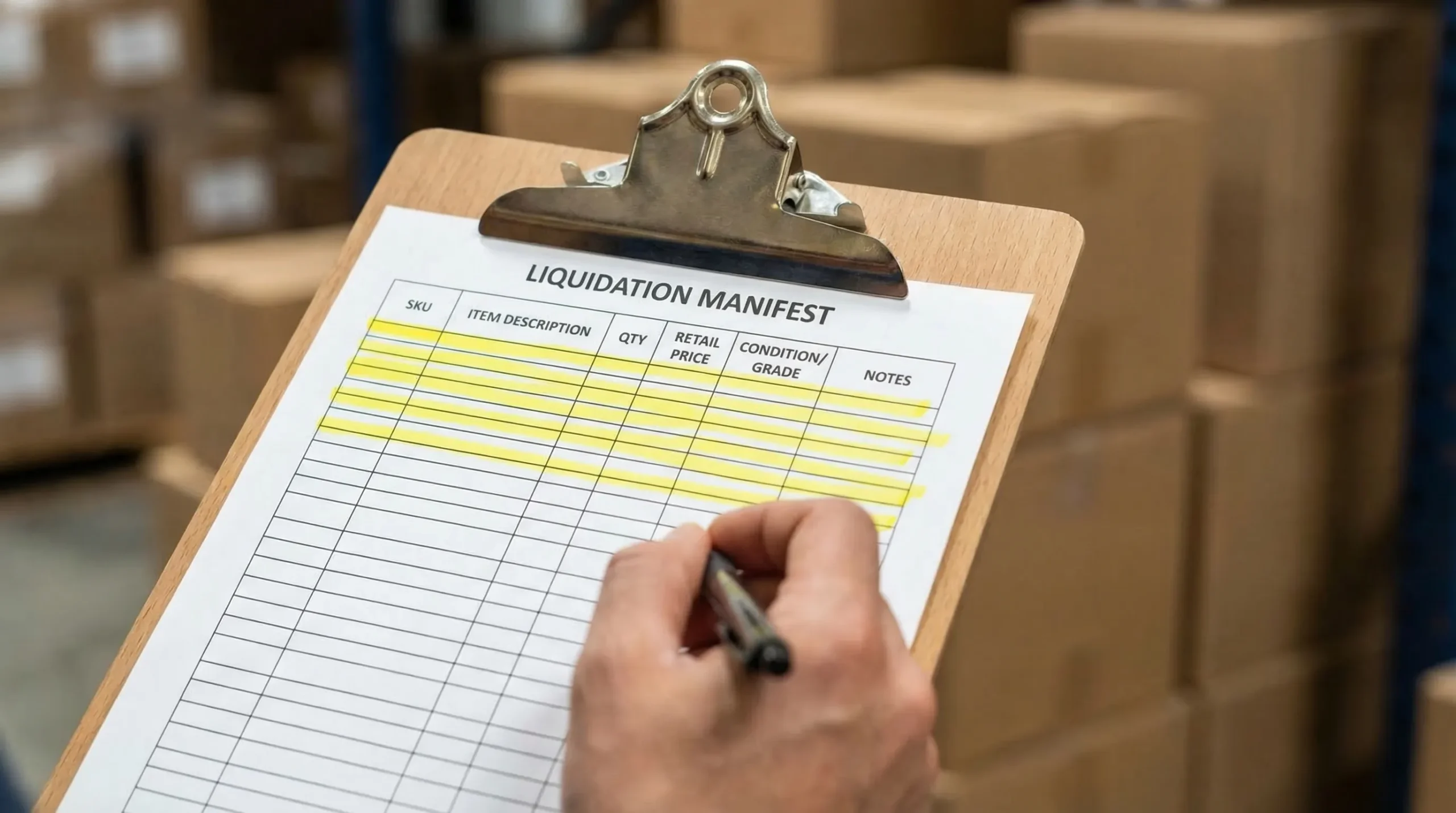
A manifest is your best tool for estimating resale value before the pallet arrives. It is not a guarantee, but a good manifest dramatically reduces surprise loss.
A strong manifest gives you enough detail to answer four questions:
- What items are included?
- What is the estimated retail value (and is it realistic)?
- What condition language is being used?
- How many total units and how much category concentration is there?
Manifest fields that matter most
Use this table as a quick “scan test” when you open a manifest.
| Manifest field | Why it matters for resale | Quick warning sign |
|---|---|---|
| Item description (clear product name) | Helps you price accurately and choose sales channels | Vague lines like “general merchandise” across many rows |
| Quantity per line and total units | Impacts processing time, storage, and sell-through | Missing totals, or quantities that do not add up |
| Retail value (per item and total) | Useful for rough comparison between lots | Inflated retail, or retail shown without brand/model |
| Condition or grade | Determines testing time and return risk | “Untested” without any other detail |
| SKU/UPC or model | Lets you check comps and compatibility | No identifiers on high-value items |
| Category mix | Predicts sell-through speed (and seasonality) | Heavy concentration in slow-moving categories |
| Notes (missing parts, damage) | Saves you from hidden labor and returns | No notes at all on a “returns” load |
Common manifest problems (and how to respond)
A few issues are common in liquidation. What matters is whether you price them in.
Problem: “Retail value” is used like a price tag. Retail is not resale value. For customer returns, your realized value might be a fraction of retail after testing, missing parts, fees, and markdowns.
Problem: The manifest is “representative” or “example only.” That usually means the lot can vary. Treat it like a blind pallet and lower your maximum bid.
Problem: No condition column, just “returns.” Returns range from unopened to destroyed. Without a grading system, you are buying uncertainty.
Problem: Too many high-dollar lines without model numbers. If you cannot verify what the item actually is, you cannot price it confidently.
For a full set of supplier questions you can copy and paste before you buy, use: Pallets Store Guide: What to Ask Before You Buy.
Grades and conditions: how to translate liquidation language into real cost
Most Target pallet buyers lose money in the gap between “what the listing says” and “what it takes to sell.” Condition is where that gap lives.
Different suppliers use different labels, but many lots fall into a few practical buckets. Here is how to think about them as a reseller.
| Common grade/condition label | What it often means in practice | Your main cost driver | Best-fit resale channels |
|---|---|---|---|
| New / New in box | Unused, typically retail-ready | Minimal, mostly listing and shipping | Amazon (if compliant), eBay, your site |
| Open box | Opened packaging, usually complete | Inspection, occasional missing accessories | eBay, Facebook Marketplace, flea market |
| Shelf pull | Pulled from shelf, may have scuffs or sticker residue | Cleaning, repackaging | Flea market, bin store, local sales |
| Customer returns | Mixed condition, may be incomplete or used | Testing, missing parts, higher return rate | Local, eBay, bundles, parts |
| Salvage / As-is | Non-working, damaged, or incomplete | Disposal, parts harvesting, labor | Parts lots, local clearance, recycling |
Two practical takeaways:
Grades change your labor math. A cheaper returns pallet can cost more than a higher-priced shelf pull pallet once you account for time, trash, and refunds.
Grades change your risk profile. The more “as-is” the inventory, the more you need an exit plan (bundles, bin pricing, parts-only, donation, recycling).
If your load is electronics-heavy, condition matters even more because testing time and return rates can destroy margins. This guide helps you avoid the worst traps: Liquidation Electronics: What to Buy and What to Avoid.
The biggest risks when buying Target pallets (and how to reduce them)
Liquidation is not a scam by default, but it is an industry where small misunderstandings become expensive. These are the risks that hit Target pallet buyers most often.
Risk 1: Missing parts, missing quantities, or swapped items
Returns pallets commonly include items missing chargers, remotes, screws, manuals, filters, and proprietary accessories. Some categories (small appliances, vacuums, baby gear) become hard to resell when one small part is missing.
How to reduce it:
- Prefer lots with a detailed manifest and condition notes
- Build a standard process for “incomplete” inventory (bundle, parts-only listing, or local clearance)
- Price high-miss categories more conservatively
Risk 2: Condition mismatch (your grade assumptions were wrong)
A pallet described as “open box” can still contain used items, cosmetic damage, or heavy wear. If you planned to sell online, you might get crushed by returns.
How to reduce it:
- Ask how the supplier defines each grade
- Request real photos from the exact lot when possible
- Make sure your pricing includes a realistic “unsellable” percentage
Risk 3: Restricted, hazmat, or marketplace-gated items
Some pallets include products that create shipping or marketplace issues (certain batteries, aerosols, chemicals, recalls, or items that require approvals).
How to reduce it:
- Know your sales channel rules before you buy
- Separate questionable items during receiving and label them clearly
- Avoid “mystery” pallets if you rely heavily on Amazon
Risk 4: Landed cost surprises (freight, liftgate, appointments)
A pallet that looks cheap can become expensive when you add freight class, residential delivery fees, liftgate, and appointment requirements.
How to reduce it:
- Quote freight before checkout (or use a supplier that supports shipping and tracking)
- Confirm whether you need a dock, forklift, or liftgate
- Compare pickup versus delivery based on your location and volume
For a deeper breakdown, see: Liquidations Near Me: Pickup vs Freight Delivered Pallets.
Risk 5: Slow sell-through and seasonality
Target pallets often include seasonal goods. Seasonal inventory can be great (high demand windows), but it can also sit forever if you buy it late.
How to reduce it:
- Match the category mix to your sales channels
- Avoid buying heavy holiday lots after the season unless the price is low enough for bin-store style clearance
- Track your sell-through rate, not just margin per item
A simple pricing framework: turn the manifest into a maximum buy price
You do not need perfect math, you need consistent math.
Step 1: Estimate recoverable resale value (not retail)
From the manifest, estimate what you can realistically recover after markdowns. Use conservative comps.
Step 2: Subtract the costs most beginners forget
At a minimum, include:
- Inbound freight and accessorials (liftgate, appointment)
- Selling fees (platform fees, payment processing)
- Returns/refunds allowance (especially for online)
- Supplies (labels, tape, boxes)
- Trash, recycling, disposal
- Labor (even if it is your own time)
Step 3: Use a maximum buy price rule
A practical rule is:
Max Buy Price = (Expected Resale Revenue × Conservative Recovery Rate) − Total Costs − Target Profit
Your “recovery rate” is where you price in uncertainty. For cleaner grades you can use a higher rate, for returns and salvage you should use a lower one.
If you want a more detailed breakdown of profit math, overhead, and permits that impact real net income, use: Liquidation Business Basics: Costs, Permits, and Profit Math.
Receiving Target pallets: inspection, documentation, and damage control
How you receive a pallet affects how much you can recover from it.
When the truck arrives:
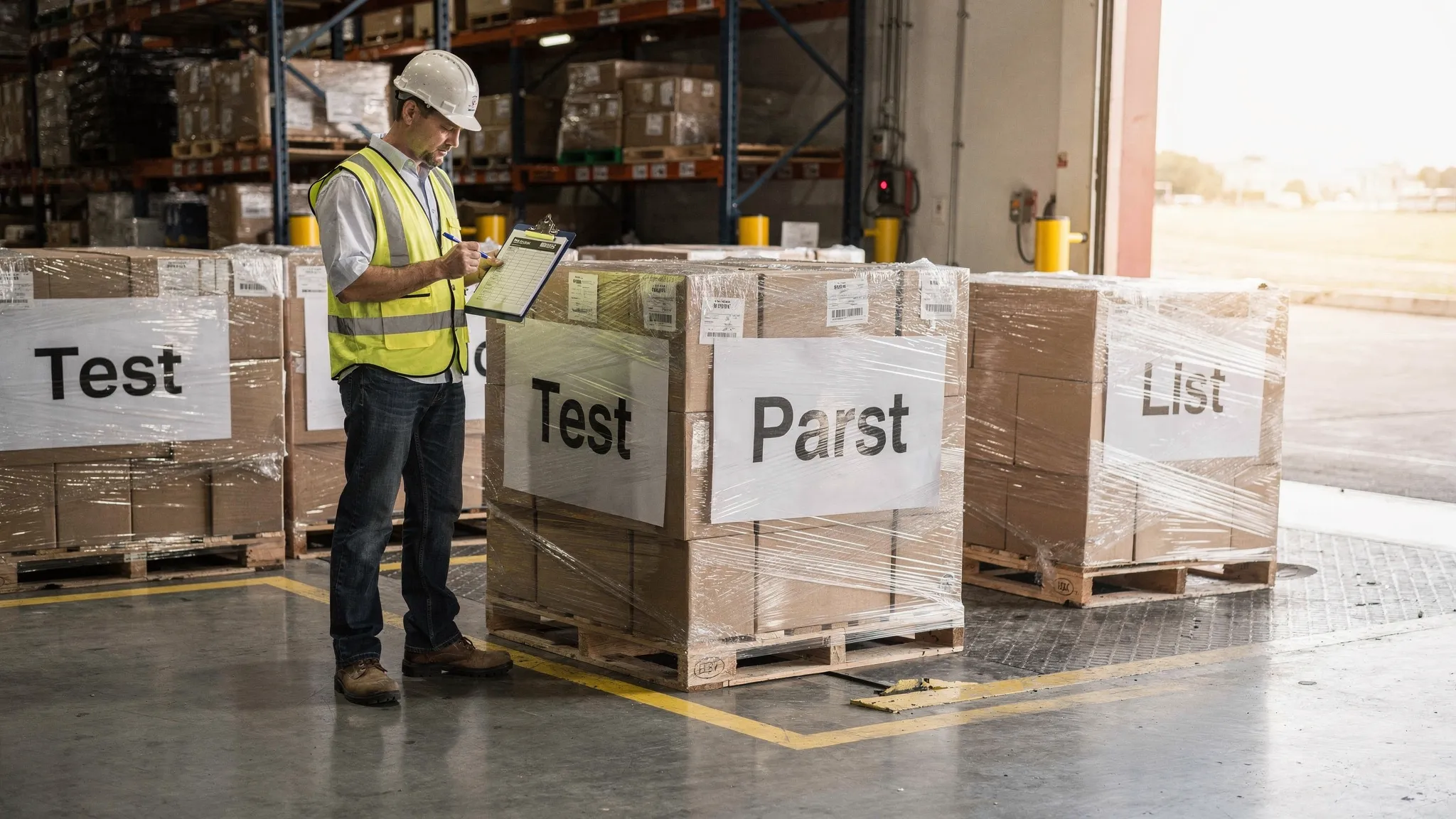
- Photograph the pallet(s) before you break wrap (all sides, including labels)
- Note obvious crush damage, water exposure, or broken pallets
- Count pallets and compare to the BOL and order confirmation
- Separate “sellable fast” from “needs testing” immediately
If you are receiving at a home garage or small storage unit, your door becomes part of your operations. A malfunctioning door can delay unloads and create safety issues, especially when you schedule freight. If you are in Arizona or Nevada and need residential service, a local option is residential garage door specialists who handle repairs and replacements in the Phoenix and Las Vegas metros.
What to ask a supplier before buying Target liquidation pallets
You do not need to interrogate suppliers, but you do need clarity. Ask questions that reduce uncertainty.
- Is a manifest provided, and is it for the exact lot (not an example manifest)?
- How are grades defined, and are items tested?
- What is the source type (returns, shelf pulls, overstock, salvage)?
- Are there any restricted categories (hazmat, recalls, liquids, batteries)?
- What are the shipping terms, and do you provide tracking?
- What is the claim process if pallets arrive damaged or shorted?
For a broader truckload-oriented due diligence process (useful when you scale past single pallets), read: American Liquidations: How to Buy Truckloads Safely.
Where to buy Target pallets (what “good sourcing” looks like)
The best Target pallet deals are not just the cheapest, they are the most predictable.
A strong liquidation supplier for Target pallets typically offers:
- Clear grading language and consistent lot descriptions
- Manifests (and transparency about what they do and do not guarantee)
- Nationwide shipping (and international shipping if you export)
- Order tracking and support when issues come up
If you are comparing sources, keep your focus on repeatability. One lucky pallet does not build a business. A supplier that consistently provides manifests and responsive support helps you scale.
To explore wholesale liquidation pallets and truckload sourcing options, visit American Bulk Pallets.
Frequently Asked Questions
Are Target pallets profitable for resellers? They can be profitable when you buy based on the manifest, match the grade to your sales channel, and price in freight, labor, and returns. Blind buying is where most losses happen.
What is the difference between shelf pulls and customer returns in Target pallets? Shelf pulls are typically items removed from shelves (often cleaner condition), while customer returns are mixed condition and more likely to have missing parts or wear.
Can I sell Target pallet items on Amazon? Sometimes, but it depends on the specific product, brand restrictions, and your account approvals. Many resellers use a mix of channels (eBay, Facebook Marketplace, flea markets, and their own sites) to reduce risk.
How accurate are liquidation manifests? Accuracy varies by supplier and lot type. Treat manifests as planning tools, not guarantees, and use conservative pricing and recovery assumptions.
What grade should beginners start with? Beginners usually do best with cleaner grades (new, open box, shelf pulls) because they require less testing and create fewer returns and customer complaints.
What is the biggest hidden cost in Target pallets? Freight and labor are the two most common. A cheap pallet can become expensive when you add liftgate fees, disposal, and hours of testing and cleaning.
Buy Target pallets with clearer expectations
If you are looking for Target-style liquidation inventory with product manifests, support for resellers, and shipping options that work for both small buyers and high-volume operators, American Bulk Pallets supplies wholesale liquidation pallets and direct truckload sourcing.
Browse inventory and get help choosing the right lot size for your business at American Bulk Pallets.