
Buying Amazon pallets can be a smart way to source inventory for your online store, flea market booth, bin store, or local resale warehouse, but it is not “cheap inventory” by default. Your results usually come down to three things:
- Condition reality (what the goods are actually like when you open the pallet)
- Manifest quality (how accurately the pallet is described)
- Margin math (how you price, process, and sell fast enough to protect cash flow)
This guide breaks down each piece so you can buy Amazon return pallets with fewer surprises and more predictable profits.
What people mean by “Amazon pallets”
In liquidation, “Amazon pallets” is often shorthand for palletized lots of Amazon-origin inventory. That can include customer returns, undeliverables, shelf-pulls, overstock, or mixed lots that were consolidated in a warehouse.
What matters for you as a reseller is not the label, it is the lot type and inspection level.
- Customer returns: Highest variability. Items might be unused, lightly used, missing parts, or damaged.
- Open-box: Often better than raw returns, but still may have missing accessories.
- Overstock/shelf-pulls: Typically more consistent, but not always available at pallet-level pricing.
- Uninspected/“as-is” lots: Cheapest on paper, riskiest in reality.
If you want a safer starting point, prioritize lots with clearer grading and a usable manifest, and avoid anything that reads like “salvage” unless your business is built for repairs, parts harvesting, or heavy discount retail.
Amazon pallet conditions explained (and what they mean for resale)
Condition terms vary by supplier, so treat them as a starting hypothesis, not a guarantee. The goal is to understand what each label usually implies for testing time, return rate, and resale channel.
Here is a practical reseller-focused way to think about common conditions:
| Condition label (common) | What it usually means | Best-fit resale channels | Main margin risks |
|---|---|---|---|
| New / Sealed | Factory sealed, unused | Amazon/eBay/Walmart Marketplace (if ungated), local retail | Gating/IP claims, authenticity documentation needs |
| Open-box / Like new | Packaging opened, item often unused | eBay, local sales, your own site | Missing accessories, cosmetic scuffs |
| Customer returns (uninspected) | Mixed: unused to heavily used | Flea markets, bin stores, discount bundles | High testing time, non-working items |
| Used / Tested (if truly tested) | Some level of functional check performed | eBay, Facebook Marketplace | Testing standard may be unclear |
| Salvage / Parts | Not working, incomplete, or heavily damaged | Parts resellers, repair shops, scrap | Disposal costs, hazmat, very low recovery |
Tip: If a listing uses condition terms but does not state who graded it and how, assume you are buying a mixed lot and price accordingly.
Manifests: what they are, how to read them, and what they miss
A manifest is the inventory list for a pallet or truckload. In the best cases, it lets you estimate resale value, plan processing labor, and avoid categories you cannot sell.
In the real world, manifests range from excellent to almost useless.
What a good manifest usually includes
Most reseller-friendly manifests include some mix of:
- Item description and sometimes brand/model
- Quantity
- An ID (SKU, ASIN, UPC, or internal code)
- A reference value (MSRP, retail, or “estimated retail”)
- Condition notes or grade (sometimes)
What a manifest often does not tell you
Even a “good” manifest may not reveal:
- Missing chargers, manuals, remotes, or proprietary parts
- Hidden damage (cracked housings, liquid exposure, stripped screws)
- Counterfeit risk in certain categories
- Compatibility constraints (locked devices, region-locked items)
- Whether the item is restricted on major marketplaces
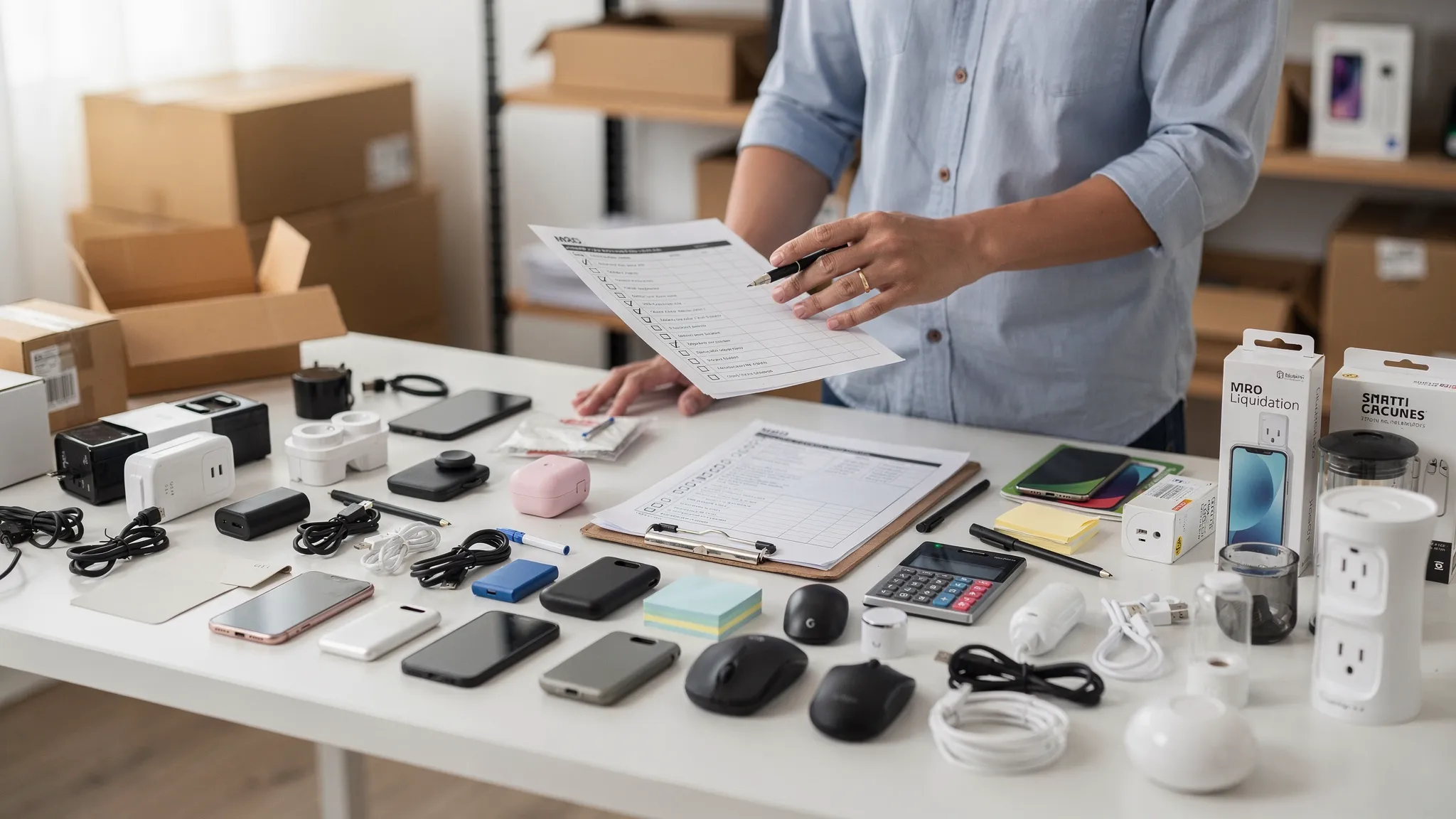
A manifest confidence checklist (use this before you bid)
Instead of asking “Is there a manifest?”, ask “Can I trust this manifest enough to price the lot?” Use this quick checklist.
| Check | What to look for | Why it matters |
|---|---|---|
| Match rate | Does the manifest clearly match the pallet ID/lot number? | Prevents “generic manifest” bait-and-switch |
| Specificity | Real model numbers, sizes, or variants, not vague “assorted items” | You cannot comp accurately without specificity |
| Category mix | Are categories consistent with your sales channels? | Mixed categories increase labor and slow sell-through |
| Value definition | Does “retail value” mean MSRP, last known price, or estimate? | Avoids overpaying on inflated reference values |
| Count realism | Are quantities believable for a pallet size/weight? | Obvious red flags signal weak controls |
Bottom line: A manifest is a planning tool, not a warranty.
Margins on Amazon return pallets: the math that actually matters
Most beginners look at “Retail value” and assume profit. Pros focus on recovery rate and landed cost.
Step 1: Calculate landed cost (your true cost per pallet)
Landed cost is what you pay to get the pallet into your workspace, ready to sort.
- Pallet price
- Buyer premium (if any)
- Freight/shipping
- Liftgate/residential fees (if applicable)
- Packing supplies and disposal (often overlooked)
If you are still getting comfortable with freight math and receiving, this companion guide can help: Liquidations Near Me: Pickup vs Freight Delivered Pallets.
Step 2: Estimate recovery rate by condition (conservatively)
Recovery rate is the percent of your landed cost you can recover in sales (after platform fees and typical losses). It is driven by:
- How much you can sell as “ready to list” vs “needs work”
- Your average selling fees and shipping costs
- Your local demand (and how fast you can move inventory)
A simple planning model many resellers use is to split a pallet into three buckets:
| Bucket | Typical reality on returns-heavy pallets | How it affects margin |
|---|---|---|
| Fast movers | Clean items that list and sell quickly | Pays back cash flow |
| Work required | Testing, cleaning, missing part replacement | Eats labor, can still be profitable |
| Dead/low value | Broken, incomplete, or unsellable | Becomes disposal or bundle stock |
Step 3: Use a margin formula you can repeat
Here is a practical formula for pallet planning:
Expected profit = (Expected gross sales) − (platform fees + outbound shipping + supplies + labor) − (landed cost)
And one metric worth tracking:
Landed cost per sellable unit = landed cost ÷ number of units you can realistically sell
Worked example (simple, not perfect)
Assume you buy one Amazon return pallet:
- Pallet price: $650
- Freight and accessorials: $250
- Supplies/disposal: $50
Landed cost: $950
After sorting:
- 35 units are sellable and worth listing
- 15 units are bundle-only or parts
If your average net proceeds (after fees and outbound shipping) are $35 per sellable unit:
- Expected net proceeds: 35 × $35 = $1,225
- Subtract labor estimate (example): $150
Expected profit: $1,225 − $150 − $950 = $125
That is not a huge number, but it is realistic for many mixed return pallets. The point is that small changes decide the outcome:
- If freight rises by $150, profit can disappear.
- If only 28 units are sellable (not 35), profit can disappear.
- If you can improve net proceeds to $40, profit improves materially.
For a deeper breakdown of startup and ongoing costs that hit your margins, see: Liquidation Business Basics: Costs, Permits, and Profit Math.
The biggest margin killers (and how to prevent them)
Amazon pallets can be profitable, but a few predictable issues wreck ROI if you do not plan for them.
Freight surprises and slow receiving
If you are buying delivered pallets, your margin is tied to freight. You protect yourself by:
- Getting the pallet dimensions/weight when possible
- Confirming dock vs liftgate needs
- Scheduling delivery when you can receive immediately (to avoid re-delivery/storage fees)
This is also why many scaling resellers transition from single pallets to more efficient volume: American Liquidations: How to Buy Truckloads Safely.
Missing accessories and “incomplete sets”
Returns often come back without the one part that makes the item valuable. Common examples:
- Vacuums without chargers
- Small appliances without bowls or blades
- Electronics without remotes, power cords, or mounting hardware
Your mitigation: price your buy based on a conservative sellable-unit count, and build a process for accessory sourcing (or bundle incomplete items locally).
Electronics risk (testing time and hidden defects)
Electronics can be great, but only if you have a workflow. If electronics are part of your Amazon pallet mix, this guide helps you avoid common traps: Liquidation Electronics: What to Buy and What to Avoid.
Marketplace restrictions and documentation
If your plan is to resell on Amazon or other marketplaces, remember:
- Some brands/categories are gated.
- Some items require invoices or specific compliance info.
- Some products (especially cosmetics, baby items, ingestibles) carry higher risk.
Factor this in before you buy, not after your garage is full.
Business compliance as you scale
Most pallet resellers will never touch excise taxes, but if your business expands into areas that trigger them (for example, certain fuel-related operations or taxable goods), you may need to file IRS Form 720. If that applies, a dedicated service can simplify the process, see how to file IRS Excise Tax Form 720 online.
A practical workflow for buying Amazon pallets with fewer surprises
Before you buy: ask questions that protect your cash
Use a consistent pre-buy checklist. This article lays out the best questions to ask any pallet seller: Pallets Store Guide: What to Ask Before You Buy.
For Amazon pallets specifically, also ask:
- Is the lot manifested or unmanifested?
- What does the condition label mean in your operation (customer returns, open-box, salvage)?
- Are there any excluded categories (hazmat, liquids, food, regulated items)?
- What is the policy if the lot is materially misrepresented (if any)?
When the pallet arrives: sort for speed, not perfection
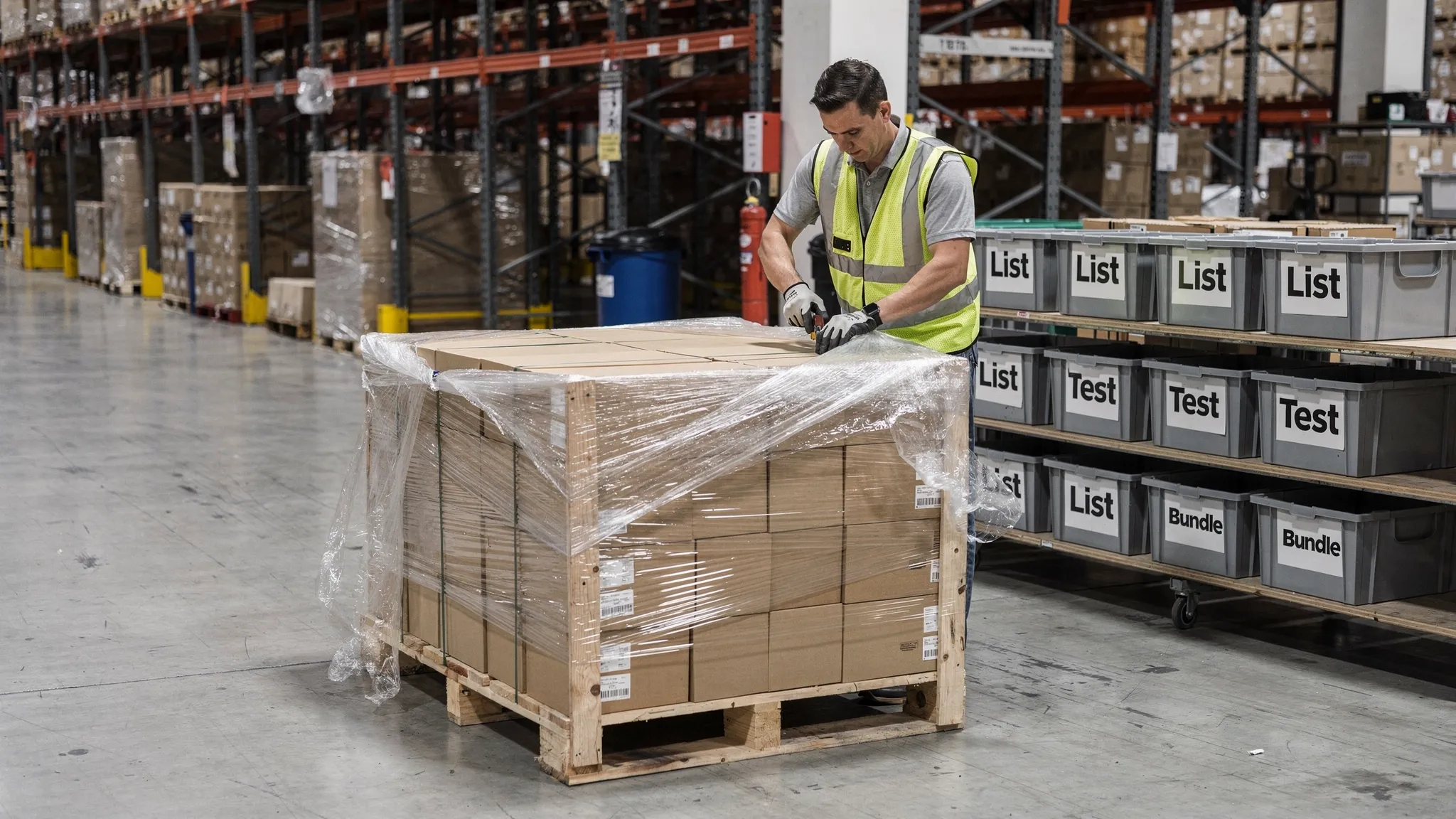
Your first goal is to turn the pallet into sellable piles quickly.
A simple approach that works for many small resellers:
- Clean list: ready to photograph and list
- Test/inspect: needs quick checks (power on, missing parts, basic function)
- Bundle/parts: incomplete or low value, sell locally in bundles
- Dispose/recycle: true trash or unsafe items
Pricing: target fast sell-through to protect margin
Return pallets reward speed. Inventory that sits costs money (space, time, opportunity).
A practical pricing rule for many categories is:
- Price “clean list” items competitively to move in 7 to 21 days.
- Bundle low-value items aggressively for cash recovery.
- Avoid sinking time into repairs unless the resale upside is obvious.
Where to buy Amazon pallets for resale
Your supplier matters as much as your sales skill. Look for a liquidation partner that:
- Provides clear conditions and product manifests when available
- Has consistent communication and support
- Can ship nationwide (and ideally handle volume as you grow)
American Bulk Pallets supplies wholesale liquidation pallets and truckload liquidations for U.S. resellers, with manifests provided and shipping available nationwide (and internationally). To see current availability and learn what is a fit for your business model, start here: American Bulk Pallets.
Frequently Asked Questions
Are Amazon pallets worth it for beginners? Yes, if you buy conservatively, avoid high-risk categories at first, and plan for testing and disposal. Beginners often do best with lots that have a usable manifest and clearer grading.
What condition should I buy if I want the best margins? There is no universal best, but many resellers find open-box or better-graded returns offer a workable balance of price and sellable rate. Salvage can be profitable only if you have a parts/repair outlet.
How accurate are manifests on Amazon return pallets? It depends on the supplier and the lot type. Manifests can be very helpful, but they often miss missing accessories, hidden defects, or substitutions. Use the manifest to estimate, then price in a buffer.
How do I calculate profit on an Amazon pallet? Start with landed cost (pallet price plus freight and fees). Then estimate sellable units and your average net proceeds after fees and shipping. Profit comes from conservative buying and fast sell-through.
Can I resell Amazon pallet items back on Amazon? Sometimes, but many categories and brands are restricted, and you may need proper invoices or documentation. Always check marketplace rules before you buy.
Buy Amazon pallets with clearer expectations
If you want to source liquidation inventory with transparent communication and reseller-focused support, explore the current wholesale pallet and truckload options at American Bulk Pallets. If you are unsure what to start with, use the question checklist in our Pallets Store Guide and reach out before you place a larger order.