
Pallet sales can feel random when you are new to liquidation, but the best buyers quickly learn two things:
- inventory has seasons, and 2) freight is often the difference between a “good deal” and a money-loser.
If you are buying wholesale pallets or truckloads to resell on Amazon, eBay, Facebook Marketplace, at a bin store, or at a flea market, your goal is not just a low pallet price. Your goal is a low landed cost (product cost + shipping + handling + inevitable losses).
This guide breaks down the best times to buy, what drives pricing, and practical ways to negotiate freight so you keep margin in your pocket.
Why timing matters in liquidation (and why it’s not just about the pallet price)
Liquidation inventory is downstream from retail. When retailers experience demand spikes, returns spikes, seasonal resets, or overstock cleanouts, liquidation volume typically rises. More volume often means more buying opportunities.
Freight has its own cycle. Capacity and rate swings can raise your cost per pallet even when pallet prices look attractive. A $300 savings on a pallet can disappear if you pay an extra $350 in accessorial fees, redelivery, or peak-season LTL rates.
If you want a strong buying rhythm, you need to watch:
- Retail calendar (returns, resets, seasonal sell-through)
- Freight calendar (produce season, holiday peak, regional tightness)
- Your own capacity (space, labor, cash conversion cycle)
If you want a deeper walkthrough of landed cost thinking for larger buys, pair this with Liquidation Truckloads for Sale: What to Check.
Best times to buy liquidation pallets (a practical calendar for resellers)
There is no single “cheapest week of the year” for pallet sales, but there are predictable windows when supply increases and sellers get motivated.
January to February: post-holiday returns and early-year cleanout
For many categories, this is one of the most consistent windows for return-heavy inventory.
- What you’ll see more of: apparel, small electronics accessories, home goods, giftables
- What to watch: higher return rates can mean more missing parts, opened packaging, and testing labor
If your workflow is dialed in (triage, quick testing, honest grading), this window can be great for volume.
March to May: spring resets (and freight starts getting tricky)
Retailers make space for spring and summer assortments. You may see better availability in certain seasonal categories, but freight can begin tightening in some lanes.
- What you’ll see: home and garden items, seasonal, outdoor, some clearance carryover
- Freight risk: produce season can tighten regional capacity and push rates up (especially in and out of produce-heavy regions)
July to August: mid-year promotional spikes and pre-Q4 positioning
Prime-time promotional events and mid-year inventory shifts can create pockets of opportunity.
- What you’ll see: mixed general merchandise, small appliances, back-to-school related items
- Reseller advantage: if you can list fast, you can sell into late-summer demand
For Amazon-origin inventory timing and risk, it helps to understand what “returns” really implies operationally. See Amazon Pallets Returns: What “Customer Return” Really Means.
September to early October: back-to-school leftovers and early holiday setup
This is often a strong planning window: you can buy while still shipping and processing before Q4 demand ramps.
- What you’ll see: toys, home, some apparel, seasonal transitions
- Why it matters: you are stocking before holiday freight congestion gets worst
Late November to December: selective buys only (unless your freight and processing are bulletproof)
Yes, retail volume is huge in Q4. But freight is often at its most expensive and unpredictable.
- What you’ll see: heavy volume, fast-moving categories, but also a lot of “rush” liquidation
- Why many resellers lose money: peak freight rates, appointment delays, redelivery fees, not enough labor to process before cash gets tied up
If you are debating pickup versus freight in these windows, read Liquidations Near Me: Pickup vs Freight Delivered Pallets.
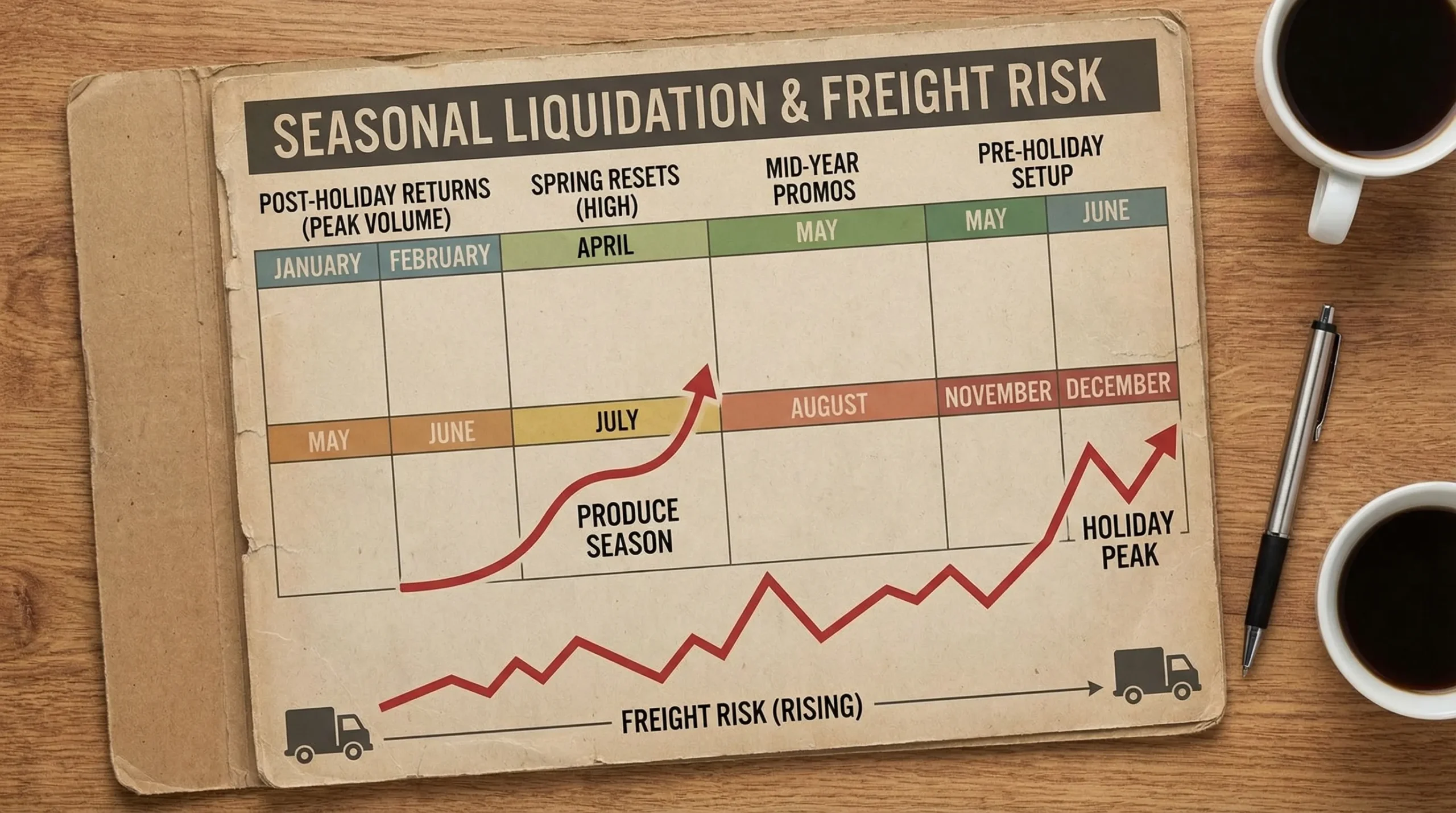
A reseller-focused “best time to buy” cheat sheet
Use this table as a planning tool. It is intentionally practical, not perfect.
| Time of year | Typical opportunity | Typical risk | Best fit for |
|---|---|---|---|
| Jan to Feb | Higher volume of returns and cleanouts | More testing, missing parts | Experienced sorters, fast listers |
| Mar to May | Spring resets and category shifts | Freight tightness in some lanes | Buyers near hubs, flexible receiving |
| Jul to Aug | Promo-driven volume pockets | Heat-sensitive storage, mixed quality | Online sellers with fast listing |
| Sep to early Oct | Pre-Q4 positioning | Seasonal misreads if you buy too late | Resellers building holiday inventory |
| Late Nov to Dec | Demand is high | Peak freight, delays, accessorials | Operators with dock access and staffing |
Freight negotiation starts before you ask for a better rate
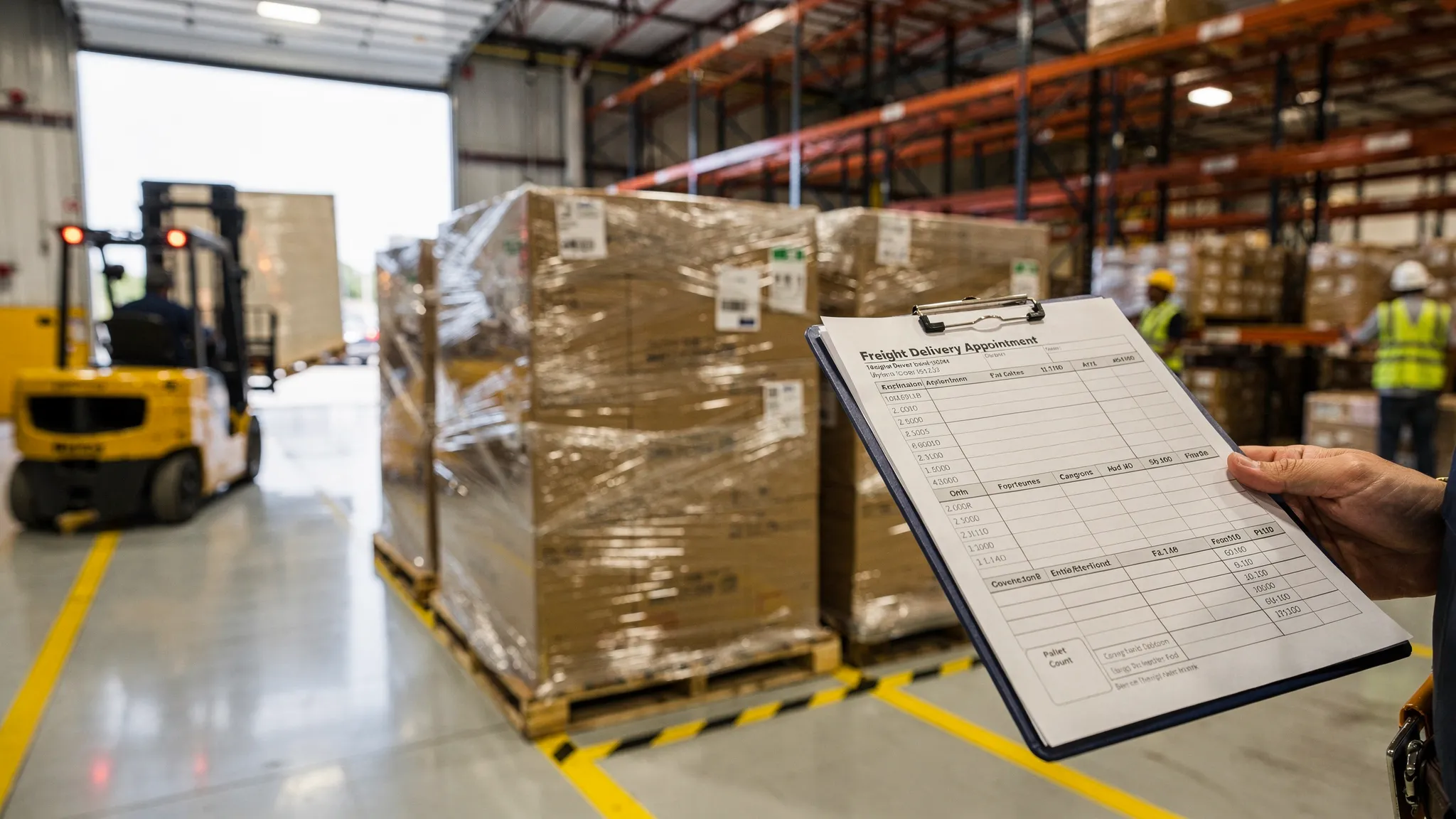
Most “freight negotiation” failures happen because the buyer cannot describe the shipment clearly, or because the delivery site triggers expensive accessorials.
Before you request a quote (or counter a quote), gather:
- Origin and destination ZIP codes
- Pallet count and total weight (estimated is fine if consistent)
- Pallet dimensions (standard 48×40 is common, but do not assume)
- Commodity type and any restrictions (hazmat, lithium batteries, oversize)
- Delivery location type (commercial dock, commercial no dock, residential)
- Receiving constraints (appointment required, time window, forklift availability)
If you scale to full truckload, the workflow becomes even more important. This checklist helps: Truckload Liquidation Checklist: From Quote to Delivery.
The biggest freight charges you can actually control (and how)
When resellers say “freight is too high,” the problem is often not the base linehaul. It is the add-ons.
Accessorials that quietly crush margins
Here are common charges and the operational change that usually eliminates them.
| Freight cost driver | What triggers it | How to reduce or avoid it |
|---|---|---|
| Liftgate service | No dock or no forklift | Ship to a location with a dock/forklift, or use a warehouse/3PL receiving address |
| Residential delivery | Home address delivery | Use a commercial address, even if it costs a small receiving fee |
| Limited access | Storage units, schools, farms, construction sites | Confirm carrier definitions upfront, ship to a standard commercial location |
| Redelivery | Missed appointment, no one on site | Use a wider delivery window, confirm appointment process, ensure phone number is correct |
| Detention | Driver waits because you cannot unload fast | Schedule labor, have a clear unload plan, stage space before truck arrives |
| Reweigh/reclass | Weight or freight class disputes | Provide accurate shipment details and photos when possible |
One of the best “negotiations” is changing the delivery address
If you are buying pallets for resale consistently, consider setting up one reliable receiving option:
- A small warehouse with a dock
- A 3PL that accepts LTL and charges per pallet
- A partner business location (with permission and clear handling rules)
Even when a receiving location charges a fee, it can be cheaper than liftgate + residential + appointment complexity.
How to negotiate freight like a reseller (without wasting time)
Freight negotiation is mostly about giving the other party a reason to sharpen the pencil. These tactics work whether you are negotiating with a supplier’s logistics team or arranging your own carrier.
Ask for options, not just a discount
Instead of “Can you do better?”, ask for structured choices:
- “Can you quote this as dock delivery vs liftgate delivery?”
- “What changes if I can accept delivery any weekday 9 to 4?”
- “What’s the rate difference between LTL and partial?”
- “If I add one more pallet, does the per-pallet freight go down?”
This turns freight into a controllable variable, not a take-it-or-leave-it number.
Negotiate on flexibility (it is cheaper than negotiating on price)
Carriers charge more when they have to hit a tight appointment window. If you can be flexible:
- Offer a 2 to 3 day delivery window
- Avoid “must deliver by” language unless you truly need it
- Confirm whether “appointment required” automatically triggers an extra fee
Bundle purchases to reduce per-pallet shipping
For many buyers, the best freight rate is achieved by increasing density:
- Buy two pallets instead of one (if it fits your cash cycle)
- Consolidate categories you can process similarly
- Plan buys so you are not shipping “air” (low-weight bulky items can be expensive)
This idea comes up again and again when comparing pallets vs larger loads. See Liquidation by the Pallet: When It Beats Buying a Truckload.
Use a “landed cost counteroffer” (simple and effective)
If freight comes in high, counter with what you can pay based on your math.
A practical script:
“Appreciate the quote. With my processing and sell-through, I need to be at $X landed per pallet to make this work. If we can adjust delivery to dock and widen the window, can you re-quote to get closer to that?”
This signals you are a serious buyer with a repeatable model.
If you want to build negotiation as a real skill (useful beyond freight, especially when you start buying larger lots), a short business-focused course can help. Options like UpSkilling courses can sharpen negotiation, operations, and analytics without you having to learn everything the hard way.
Should you negotiate freight with the supplier, or arrange your own?
Both approaches can work. The right choice depends on your experience and your lane density.
Supplier-arranged freight (simpler, often faster)
Good when you:
- Are newer to LTL and accessorial rules
- Want one point of contact for the transaction
- Need support coordinating pickup, tracking, and delivery
American Bulk Pallets ships nationwide (and can ship internationally), so if you want simplicity and support, supplier-arranged freight is often the easiest path. You can start by browsing American Bulk Pallets and asking for shipping options that match your receiving setup.
Buyer-arranged freight (more control, sometimes cheaper)
Good when you:
- Have consistent volume and known lanes
- Know your dock situation and can avoid add-ons
- Want to compare carriers directly
Even if you arrange your own freight, ask the supplier for accurate weight, pallet count, and pickup constraints, because bad data leads to reclass fees.
The negotiation that matters most: landed cost per sellable unit
Resellers often focus on “cost per pallet,” but your business runs on cost per sellable unit.
Here’s a simple way to frame it:
- If freight increases, your maximum buy price decreases
- If your recovery rate improves (better categories, better processing), you can afford higher freight
A simple landed cost worksheet (example)
These numbers are illustrative only, but the structure is what matters.
| Item | Example value | Notes |
|---|---|---|
| Pallet price | $900 | What you pay for the inventory |
| Freight | $320 | Include fuel surcharge and known accessorials |
| Receiving labor | $120 | Unload, sort, basic testing |
| Disposal/unsellables | $60 | Trash, e-waste, low-value leftovers |
| Total landed cost | $1,400 | True cost to get ready-to-sell inventory |
| Estimated sellable units | 70 | After losses and missing parts |
| Landed cost per sellable unit | $20 | $1,400 / 70 |
If your average selling price after fees is $35, you have room. If it is $22, you do not.
For more detailed profit math and realistic examples across grades and load types, read Liquidation Pallets: Grades, Loads, and Real Profit Examples.
Quick timing and freight moves that consistently improve margins
You do not need perfect timing. You need repeatable habits.
- Buy earlier for seasonal demand (especially Q4), so you are not forced to pay peak freight to “make the date.”
- Standardize your receiving (dock, forklift, consistent appointment rules) so you stop paying avoidable fees.
- Track freight cost per pallet by lane and by month. After a few buys, you will spot patterns.
- Ask for manifests when available and price based on recovery, not MSRP, especially when freight is volatile.
If you are still comparing local pickups vs shipped pallets as part of your buying strategy, Wholesale Pallets Near Me: Vetting a Warehouse in 10 Minutes is a helpful companion.
Putting it together: buy when inventory is high, and negotiate freight with operational leverage
The best pallet sales opportunities usually appear when retailers are clearing space and liquidation volume rises. But the best buyers still win on the same fundamentals:
- they plan purchases around freight seasonality,
- they avoid accessorial traps,
- they negotiate using flexibility and accurate shipment details,
- and they measure deals by landed cost, not just sticker price.
If you are ready to source consistently, explore American Bulk Pallets for wholesale liquidation pallets and direct truckload options, and use the frameworks above to keep freight from eating your margin.