
A liquidation business can look simple from the outside, buy pallets cheap, sell items for more, repeat. In practice, most new resellers struggle for three predictable reasons: they underestimate landed cost (inventory plus freight plus handling), they miss a required permit (or sales tax setup), and they do not run the profit math before they buy.
This guide breaks down the basics for U.S. resellers buying wholesale liquidation pallets and truckloads: what it really costs to operate, which permits and paperwork usually apply, and the core math that keeps your margins positive.
What a “liquidation business” actually is (and why the model matters)
At its core, a liquidation business buys excess, returns, shelf-pulls, overstock, or closeout inventory and resells it through one or more channels.
Your model drives your costs, permits, and profit expectations:
- Online resale (eBay, Facebook Marketplace, Shopify, etc.): Higher fees and shipping workload, but better pricing power per item.
- Flea market / swap meet / local booth: Lower fees, faster cash, but usually lower average selling price.
- Warehouse pickup and local delivery: More volume, but you may need equipment, space, and tighter receiving processes.
- Truckload liquidation (scaling play): Better unit economics if you can handle volume, but bigger cash requirements and more operational risk.
If you are deciding between pallets vs truckloads, the best first step is to estimate your real per-unit cost and how fast you can sell through inventory.
The real costs of running a liquidation business
Most beginners focus on the purchase price of a pallet. Experienced operators focus on landed cost and sell-through time, because those two numbers determine whether you can keep buying inventory.
One-time startup costs (typical for U.S. resellers)
These vary widely by state, city, and business size, but the categories are consistent.
| Cost category | What it includes | Why it matters |
|---|---|---|
| Business formation and setup | Entity filing (optional), basic legal/admin, business bank account | Separates personal and business risk, simplifies bookkeeping |
| Licenses and permits | Local business license, sales tax permit, secondhand dealer permit (where required) | Avoids fines, marketplace shutdowns, tax issues |
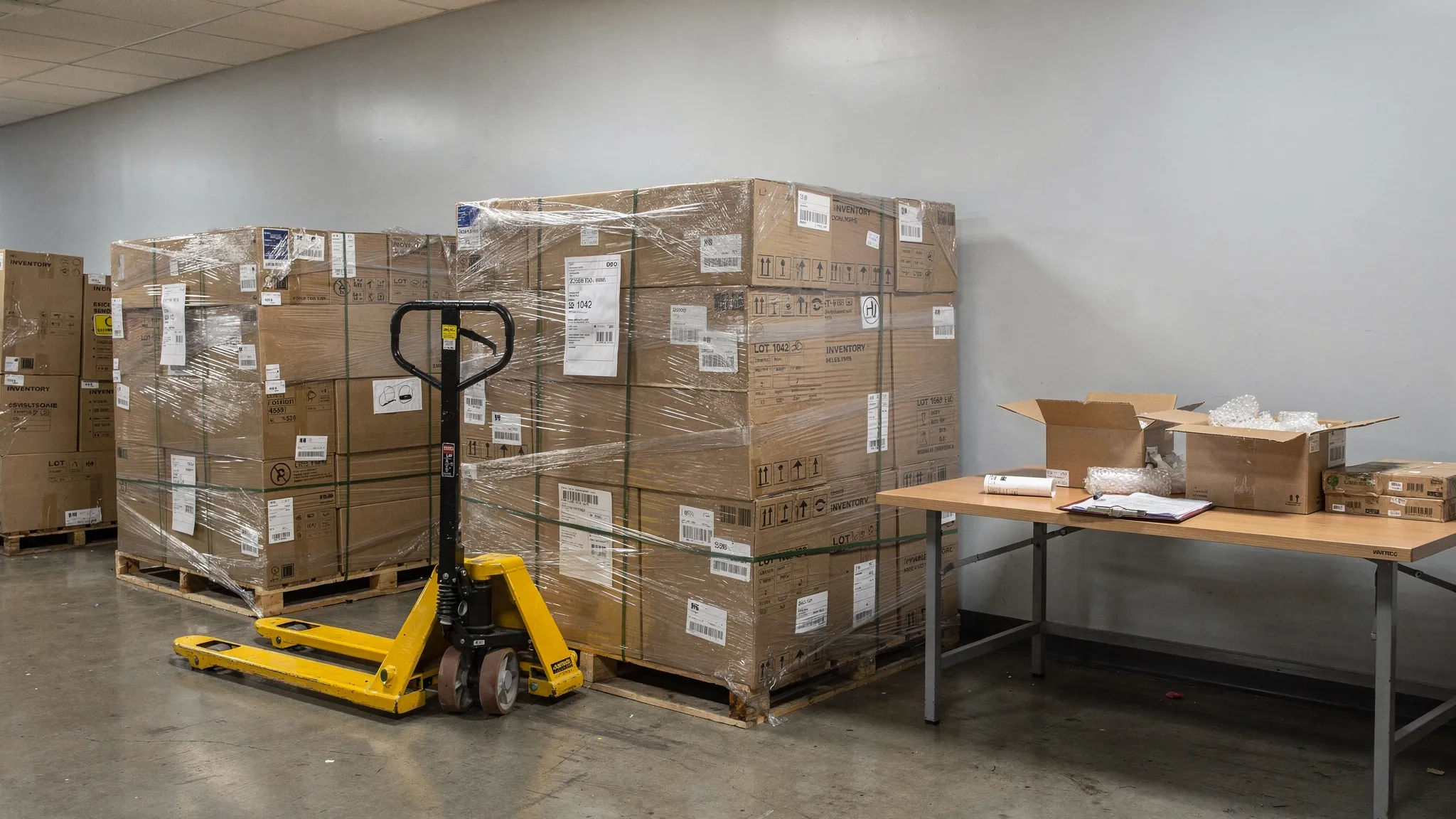
| Basic equipment | Pallet jack, shelving, bins, tape guns, scale, label printer | Receiving and fulfillment speed directly impacts labor cost |
| Initial storage | Garage, storage unit, small warehouse, container storage | Space determines how much you can buy and how organized you can be |
| Safety and compliance | PPE, fire extinguisher, spill kit (if applicable) | Helps prevent injuries and protects your lease relationship |
Ongoing operating costs (the ones that silently kill margins)
In liquidation, profit is often lost in small line items that add up.
- Freight and accessorials: Liftgate, residential delivery, limited access, re-delivery, detention.
- Shrink and damage: Missing pieces, broken items, untestable returns.
- Marketplace fees and payment processing: Often a meaningful percent of revenue.
- Labor time: Sorting, testing, cleaning, photographing, listing, customer messages, packing.
- Returns and chargebacks: Especially in electronics and higher-priced items.
- Disposal and recycling: Trash fees, e-waste recycling, hazardous material handling (when applicable).
- Insurance: General liability is common if you have a location or customer traffic.
If you want a practical way to compare suppliers and lots, use a landed-cost worksheet and decision rule like the one outlined in Pallets Store Guide: What to Ask Before You Buy.
Permits and paperwork (U.S.) that most liquidation resellers need
Permitting is not one-size-fits-all in the U.S. Your state, county, and city can all have different requirements. Treat this as a practical checklist to discuss with your local licensing office or a small-business accountant.
The common “baseline” requirements
Business registration or entity: Many resellers start as a sole proprietor, others form an LLC. The right choice depends on risk, taxes, and how you operate.
EIN (Employer Identification Number): Often needed to open business bank accounts or work with certain suppliers. The IRS provides EIN info and application details on its official site (IRS EIN guidance).
Sales tax permit / reseller certificate: If you buy inventory for resale, you typically want to be set up to purchase wholesale without paying sales tax (and then collect/remit sales tax when you sell, as required in your jurisdiction). Rules vary by state.
Local business license: Many cities and counties require a general business license even for home-based businesses.
For a government starting point, the U.S. Small Business Administration maintains a licensing overview that helps you route to the right agency (SBA licenses and permits).
Permits that may apply depending on your products and channels
Secondhand dealer or pawnbroker-style rules: Some cities require a secondhand dealer permit for certain goods. This is more common if you sell used electronics, tools, or other regulated categories.
Home occupation and zoning rules: If you store pallets, operate frequent pickups, or have employee traffic, zoning restrictions can apply.
Environmental and recycling requirements: If you process large volumes of electronics, batteries, or damaged goods, you may need to follow local e-waste and disposal rules.
Marketplace compliance: Amazon and other platforms restrict certain categories and require documentation for others. Even if your supplier is legitimate, you still need to ensure you can legally and practically sell the items you receive.
Profit math you should run before buying any pallet or truckload
A liquidation business becomes predictable when you measure a few key numbers consistently.
The essential metrics (with simple formulas)
| Metric | Formula | What it tells you |
|---|---|---|
| Landed cost | Purchase price + freight + accessorials + receiving supplies | Your true cost basis for the lot |
| Gross profit | Revenue − COGS (landed cost allocated to sold items) | Whether the lot works before overhead |
| Gross margin | Gross profit ÷ revenue | Your pricing power after product cost |
| Net profit | Gross profit − operating expenses (fees, labor, rent, etc.) | Whether the business actually pays you |
| Sell-through rate | Units sold ÷ units received | How efficiently you convert inventory to cash |
| Break-even revenue | Total lot cost ÷ target gross margin | Minimum sales needed to justify the buy |
A practical pallet example (with conservative assumptions)
Imagine you buy a mixed retailer return pallet.
- Pallet purchase price: $900
- Freight and delivery fees: $250
- Supplies and disposal buffer: $50
- Landed cost: $900 + $250 + $50 = $1,200
Now estimate what you can realistically sell.
- You project $2,200 in total sales at your chosen channels.
- Marketplace and payment fees average 13%: 0.13 × $2,200 = $286
- Packing materials and shipping overages: $120
- Your labor (sorting, testing, listing, packing): 18 hours at $20/hour = $360
Net profit estimate:
- Revenue: $2,200
- Minus landed cost: −$1,200
- Minus fees/shipping/labor: −($286 + $120 + $360) = −$766
- Estimated net profit: $234
That is not a failure. It is a realistic example of why liquidation is a process business, not a “buy cheap, sell high” fantasy. If you improve testing speed, raise average selling price, reduce freight per unit, or choose cleaner lots, the same workload can produce a much stronger return.
A quick sensitivity check (the step most beginners skip)
Before you buy, stress-test two variables:
- What if revenue is 20% lower than expected?
- What if labor takes 30% longer?
If either change turns your net profit negative, your buy price is too high, the lot is too risky, or the channel fit is wrong.
Costs that change when you move from pallets to truckloads
Truckloads can improve unit economics, but they amplify operational mistakes.
What usually improves
- Lower freight per unit (one delivery, more inventory).
- More consistent sourcing when you build a repeatable relationship with a supplier.
- Better channel segmentation (you can route categories to the right selling platform).
What usually gets harder
- Cash flow: You are tying up more money for longer.
- Space and handling: You may need a dock plan, equipment, and a receiving workflow.
- Quality variance: If a truckload is off-spec, it is a big problem.
If you want a safe process for larger buys, use the step-by-step approach in American Liquidations: How to Buy Truckloads Safely.
How to estimate value using manifests and condition grading
Profit math only works if your revenue estimate is grounded.
A few practical rules:
- Treat MSRP like marketing, not math. Your revenue comes from what the market actually pays for that condition.
- Weight your estimate by condition. “New”, “open-box”, “returns”, and “salvage” should not share the same sell-through assumptions.
- Plan an exit for low-value items. Bundles, flea market lots, wholesale to other resellers, or donation (where appropriate) can protect your time.
If electronics are part of your plan, the risk profile is different. This guide helps you avoid common margin traps: Liquidation Electronics: What to Buy and What to Avoid.
A simple operating workflow that protects margin
Your workflow is your moat. Two resellers can buy the same pallet and get completely different results.
A margin-protecting workflow looks like this:
- Receive and verify: Count major units, photograph the pallet, and flag visible damage immediately.
- Sort by action: List-now, test/clean, parts/repair, bundle, dispose.
- Standardize grading: Write short condition notes you can repeat and defend.
- Price with a floor: Know the minimum price that justifies your time after fees.
- Track outcomes: Record sell-through by category so your next buy is smarter.
For more help deciding whether pickup or freight delivery fits your workflow and budget, see Liquidations Near Me: Pickup vs Freight Delivered Pallets.
Storage, staging, and why containers are a scaling tool
Space is not just about “where to put stuff.” Space affects speed, accuracy, and how quickly you can turn inventory into cash.
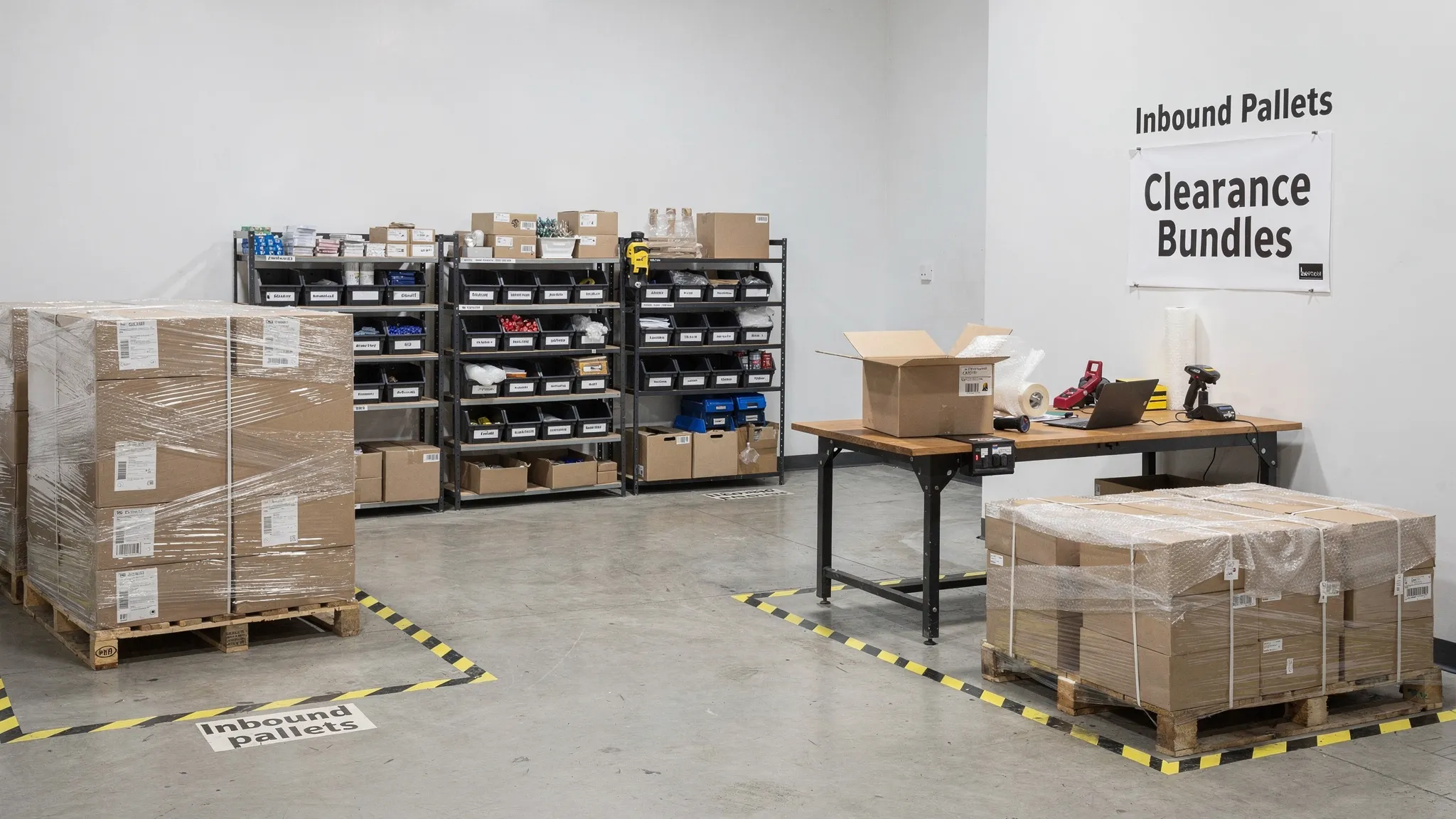
If you are scaling beyond a garage, many resellers add a dedicated staging area for:
- Unprocessed inbound pallets
- Sorted and ready-to-list inventory
- Packed and ready-to-ship orders
- Bulk clearance and bundles
For some operations, a shipping container can be a practical middle step between a small storage unit and a full warehouse lease. If you are exploring that route, you can compare options from suppliers that let you buy shipping containers online and deliver across the USA.
Where to buy liquidation inventory (without guessing)
When you are building a liquidation business, consistency beats “random deals.” Working with a supplier that provides clear lot descriptions, manifests when available, and reliable shipping helps you forecast profit and scale.
American Bulk Pallets focuses on wholesale liquidation pallets and direct truckload sourcing for resellers, with nationwide shipping and support. If you are evaluating your first purchase or planning a larger buy, start by reviewing available inventory and resources at American Bulk Pallets.
The takeaway: run the numbers, then buy
A profitable liquidation business is not built on hype or MSRP. It is built on three habits:
- Know your true landed cost.
- Get your permits and sales tax setup right for your location and channels.
- Use profit math plus conservative assumptions before you commit.
If you do those consistently, pallets and truckloads stop feeling like a gamble and start behaving like a repeatable inventory engine.