Buying from a pallets store can be one of the fastest ways to stock inventory for reselling, but it is also one of the easiest places to overpay if you skip the due diligence. Liquidation pallets and truckloads can be excellent deals, yet the quality, accuracy of manifests, and shipping terms vary widely between suppliers.
This guide is a practical set of questions to ask before you buy, written for U.S. resellers (online sellers, Amazon and eBay sellers, flea market vendors, bin store operators, and small businesses) who want fewer surprises and more predictable margins.
Why these questions matter (and what you are really buying)
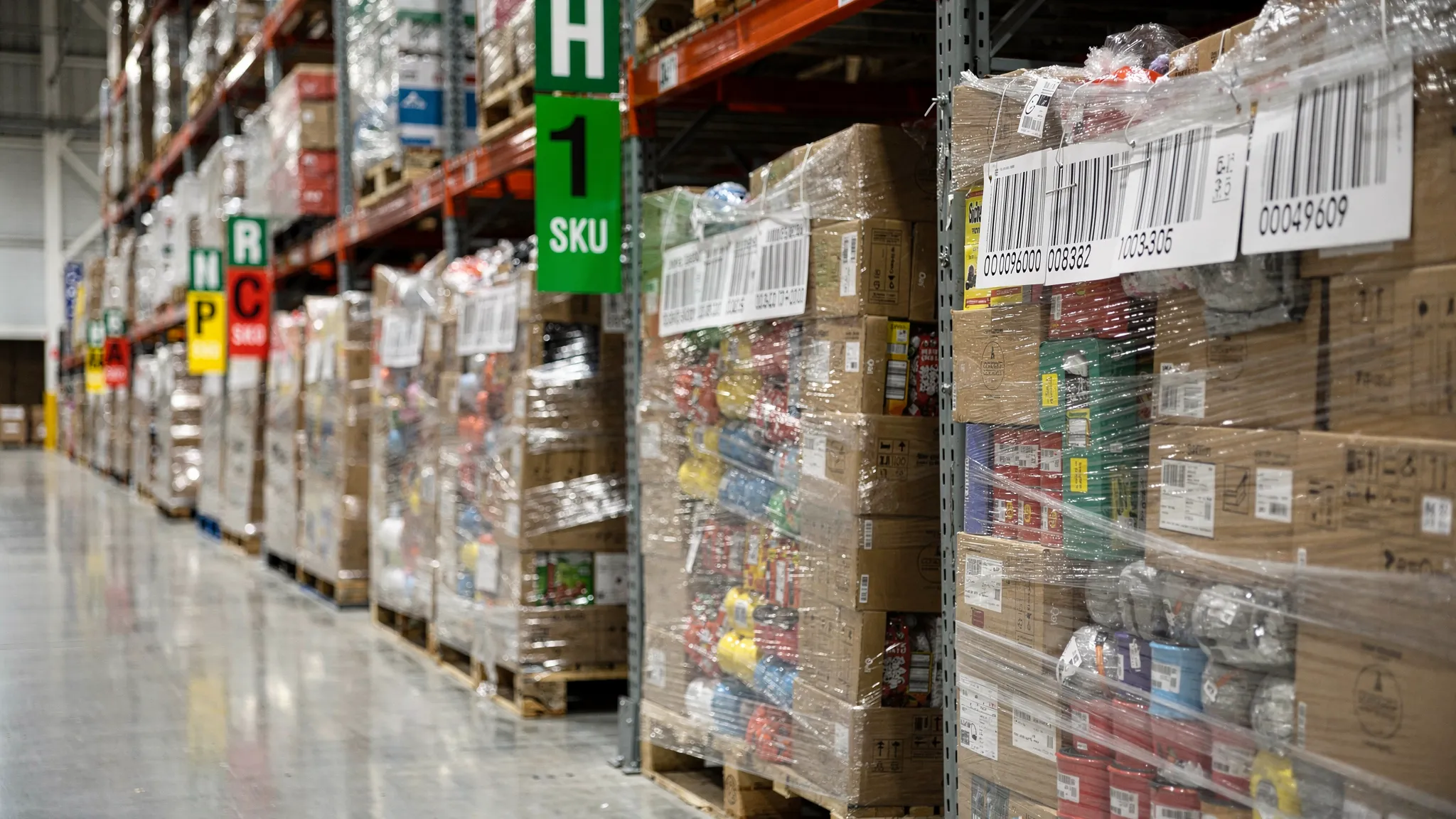
A liquidation “pallet” is not a standardized product. You are buying a lot of items that usually comes from retailer returns, shelf pulls, overstock, or closeouts. Two pallets with the same category label can perform very differently depending on:
- Source (which retailer, which program, which warehouse)
- Condition mix (new, open-box, used, untested, salvage)
- Completeness (missing parts, missing accessories, missing packaging)
- Lot building (single-SKU case packs vs mixed, cherry-picked vs untouched)
- Logistics (freight class, accessorial fees, damage risk)
The goal is not to find “perfect pallets.” It is to buy lots where the risk is visible, priced in, and manageable for your sales channel.
The “before you pay” questions to ask any pallets store
Use the questions below as a script. A legitimate supplier should be able to answer most of them clearly, in writing.
| Topic | What to ask | Why it matters |
|---|---|---|
| Business identity | What is your legal business name, location, and customer support contact? | Helps verify the seller is real and reachable if there is a freight issue. |
| Inventory source | Which retailer(s) and program type is this lot from (returns, shelf pulls, overstock)? | Different programs have very different defect rates and completeness. |
| Lot integrity | Are pallets/truckloads “untouched,” or are they sorted, graded, or cherry-picked? | Sorting can improve quality, but it can also remove the best units. |
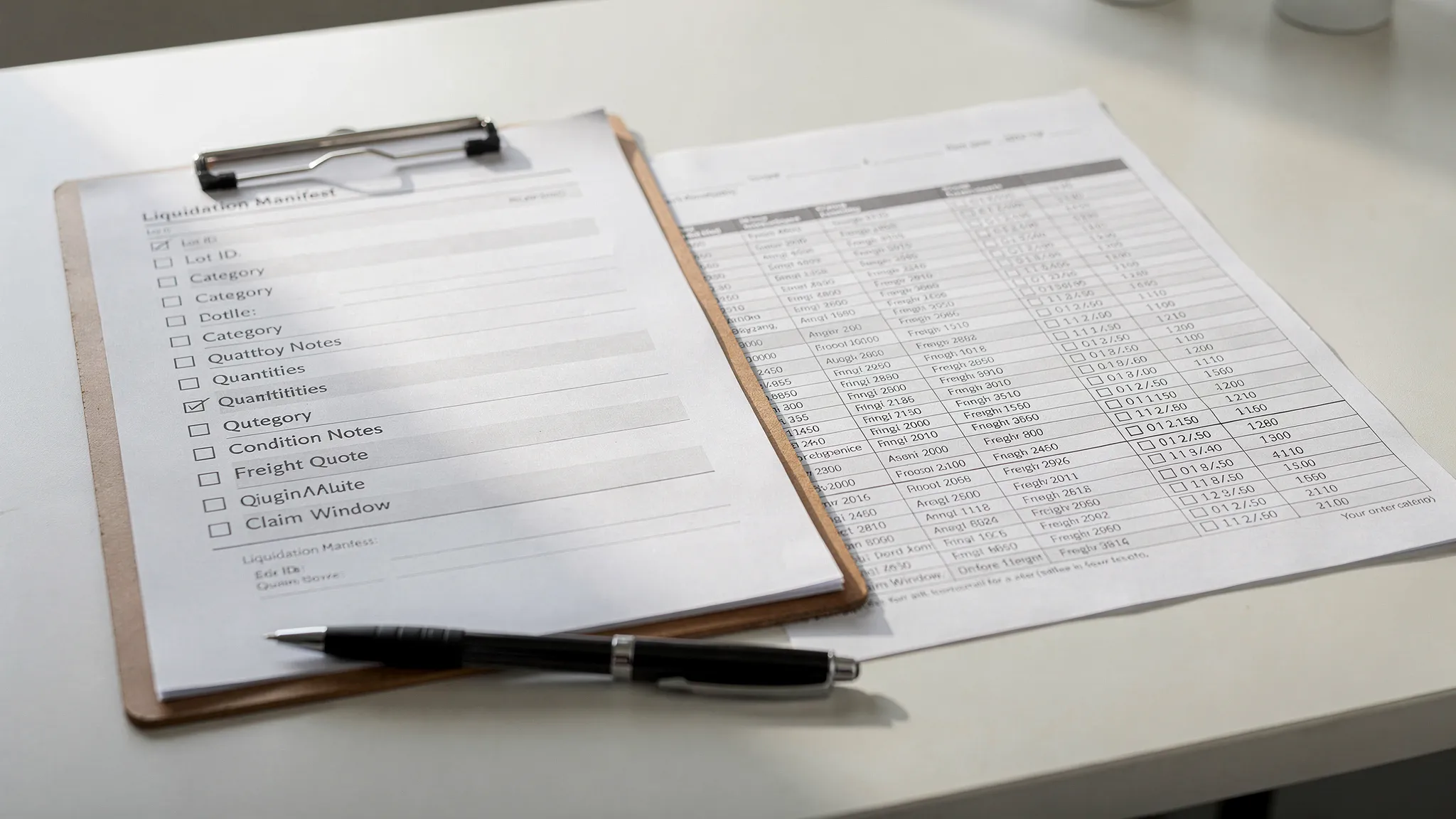
| Manifest | Is a manifest provided, and what does it include (UPC, qty, condition notes, MSRP)? | Manifest detail affects your ability to price and plan sell-through. |
| Condition | How is condition defined and graded? Is any testing performed? | “Open-box” can mean anything unless clearly defined. |
| Photos | Can you provide recent photos of the exact lot (not a stock image)? | Lets you spot obvious issues like loose repacks, water damage, or mixed categories. |
| Shipping | What carrier, timeline, and tracking method do you use? | Freight details drive landed cost and operational planning. |
| Fees | Are liftgate/appointment/residential fees included or extra? | Surprise accessorials can erase margin quickly. |
| Claims policy | What is the damage/shortage claims process and time window? | Freight claims are time-sensitive. You need a clear policy. |
| Payment | Which payment methods are accepted, and do you provide an invoice? | Invoices and traceable payment methods reduce risk. |
Questions about manifests (the document that makes or breaks your margin)
If the pallets store offers a manifest, treat it like a buying tool, not a guarantee. Ask:
What exactly is in the manifest?
A useful manifest typically includes product identifiers and quantities (UPC/SKU), and may include MSRP or estimated retail. The higher the average ticket price, the more you need item-level detail.
How accurate is it, and what are the exclusions?
Ask the supplier to clarify whether the manifest is:
- Exact for the lot or representative of a similar lot
- Generated at retailer level (often earlier in the reverse logistics chain)
- Adjusted after grading (if the supplier sorts)
Also ask what is not covered, such as missing accessories, missing manuals, or unscannable items.
Can you spot-check high-value SKUs?
If the manifest shows a few high-dollar items that would drive your ROI, ask for photos of those units or carton labels when available. You are not trying to be difficult, you are trying to avoid buying a lot whose “profit” is concentrated in items that are not actually present.
Questions about condition (define terms before you buy)
Condition language varies across the industry. Before purchasing, ask the pallets store to define their grades in plain English.
Ask how items are handled
Good clarity sounds like:
- Whether items are tested (and what “tested” means)
- Whether missing parts are noted or separated
- Whether salvage (broken, incomplete, or unsafe) is included
- Whether original packaging is required for a certain grade
Ask about batteries, hazmat, and recalls
Certain categories (like electronics with lithium batteries) can create shipping restrictions and higher return rates. You should also protect your business by checking recall information for products you plan to resell. The U.S. Consumer Product Safety Commission maintains recall notices you can search at the CPSC recall database.
Questions about lot composition (so you can match your sales channel)
A “general merchandise” lot can be great for bin stores, flea markets, and variety listings. For tighter channels (Amazon, Walmart Marketplace, brand-restricted categories), you often need more predictability.
Ask:
- Is the lot single-category or mixed? If mixed, ask for the category breakdown.
- Are there case packs or is it mostly individual units? Case packs are easier to count and list.
- What is the average unit value range? Low-AOV lots need faster sell-through to cover freight.
- Are quantities per SKU consistent? Too many one-offs can slow online listing velocity.
Questions about price (calculate landed cost, not just “pallet price”)
Two lots with the same pallet price can have very different profitability once freight and fees are included. Ask for a quote that separates:
- Lot price
- Freight cost
- Any accessorials (liftgate, appointment, limited access)
- Sales tax handling (especially if you have a resale certificate)
Here is a simple landed-cost worksheet you can use before you buy:
| Line item | Example | Your number |
|---|---|---|
| Lot price | $____ | $____ |
| Freight to your ZIP | $____ | $____ |
| Accessorials (if any) | $____ | $____ |
| Packaging/supplies | $____ | $____ |
| Estimated refurb/parts | $____ | $____ |
| Estimated landed cost | Total | Total |
If you are running multiple buys per month, consider tracking these numbers like a pro from day one. A free tool like MoneyPatrol’s expense tracker and budgeting app can help you monitor freight, COGS, supplies, and cash flow so you know which categories and lot types actually perform.
Questions about shipping and delivery (where many “good deals” go wrong)
Freight is often the largest variable cost in pallet liquidation. Before purchasing, confirm:
Delivery requirements
- Do you need a dock or forklift? If not, ask about liftgate availability and cost.
- Is delivery appointment required? Many locations require scheduling.
- Is your address considered residential or limited access? This can add fees.
Tracking and proof
Ask how you receive tracking and what documentation exists if something arrives damaged or short.
When the shipment arrives, take photos before and during unloading. This is basic protection for any freight claim.
Questions about policies (damage, shortages, and what happens next)
Liquidation is usually sold “as-is,” but that does not mean you should accept vague policies.
Ask the pallets store:
- What qualifies as a claim? (freight damage vs missing pallets vs major manifest mismatch)
- What is the claim window? (24 hours, 48 hours, 7 days)
- What proof is required? (photos, carrier paperwork, pallet labels)
- What resolution is offered? (partial credit, replacement if available)
A professional supplier will explain this clearly, not dodge it.
Questions about compliance (especially for Amazon and online resellers)
Even if you find great merchandise, your ability to resell depends on paperwork and platform rules.
Taxes and resale certificates
If you are buying for resale, you may need a resale certificate or sales tax permit depending on your state and the supplier’s nexus. For general small business guidance, the U.S. Small Business Administration is a solid starting point.
Marketplace restrictions
If you sell on Amazon, you may face brand gating, invoice requirements, or category approval. Ask the supplier whether they provide invoices and how documentation is formatted (again, do not assume a “manifest” replaces an invoice).
Red flags that should slow you down
You do not need to be paranoid, but you should be consistent. Consider walking away if you see:
- No clear business identity or support contact
- Stock photos only, no lot-specific photos when requested
- Overpromising language like “100% new” with no grading definition
- Refusal to put shipping and fees in writing
- Untraceable payment pressure (or “today only” urgency that bypasses basic questions)
How to apply this guide when buying from American Bulk Pallets
If you are comparing suppliers, use the checklist above to standardize your evaluation. When buying from American Bulk Pallets, focus on confirming the same fundamentals:
- Manifest availability (they state manifests are provided)
- Lot type (wholesale liquidation pallets vs direct truckload liquidations)
- Shipping scope (they offer nationwide shipping and international shipping)
- Support (dedicated customer support and order tracking are listed)
To start browsing, you can explore American Bulk Pallets for current wholesale inventory and truckload options. If you are newer to the model and want the big-picture mechanics of sourcing and reselling, this background guide is also useful: Unlock Big Profits with Pallet Liquidation Wholesale.
A simple decision rule: buy the lot you can explain
Before you place an order, you should be able to explain (to yourself or a business partner) three things in one minute:
- What you are buying (source, category mix, condition expectations)
- What it will cost landed (product + freight + realistic extras)
- How you will sell it (channel, pricing strategy, and what happens to duds)
If you cannot explain those three points, the problem is not liquidation, it is uncertainty. Ask more questions, request clearer documentation, or choose a different lot. That is how experienced resellers turn pallet buying from gambling into a repeatable purchasing process.