If you’ve searched “liquidations near me”, you’re probably trying to answer a practical question: should you buy liquidation pallets you can pick up locally, or have pallets delivered by freight so you can buy from the best supplier even if they’re across the country?
Both options can be profitable. The best choice depends on your budget, how fast you need inventory, your storage setup, and how comfortable you are with freight logistics. Below is a reseller-focused breakdown to help you choose correctly and avoid the most common (and expensive) mistakes.
What “liquidations near me” usually means (and what sellers don’t always explain)
In liquidation, “near me” can mean several different things:
- A warehouse you can physically drive to and load pallets yourself.
- A supplier located in your state, but they still ship LTL or truckload freight.
- A broker or marketplace listing inventory that’s stored in multiple warehouses, sometimes not local at all.
The key is separating inventory location from delivery method. A supplier can be “near you” but still require freight. Another supplier can be far away but still be your best deal after freight because the pallet quality, manifests, or pricing are stronger.
Pickup liquidation pallets: when local pickup makes sense
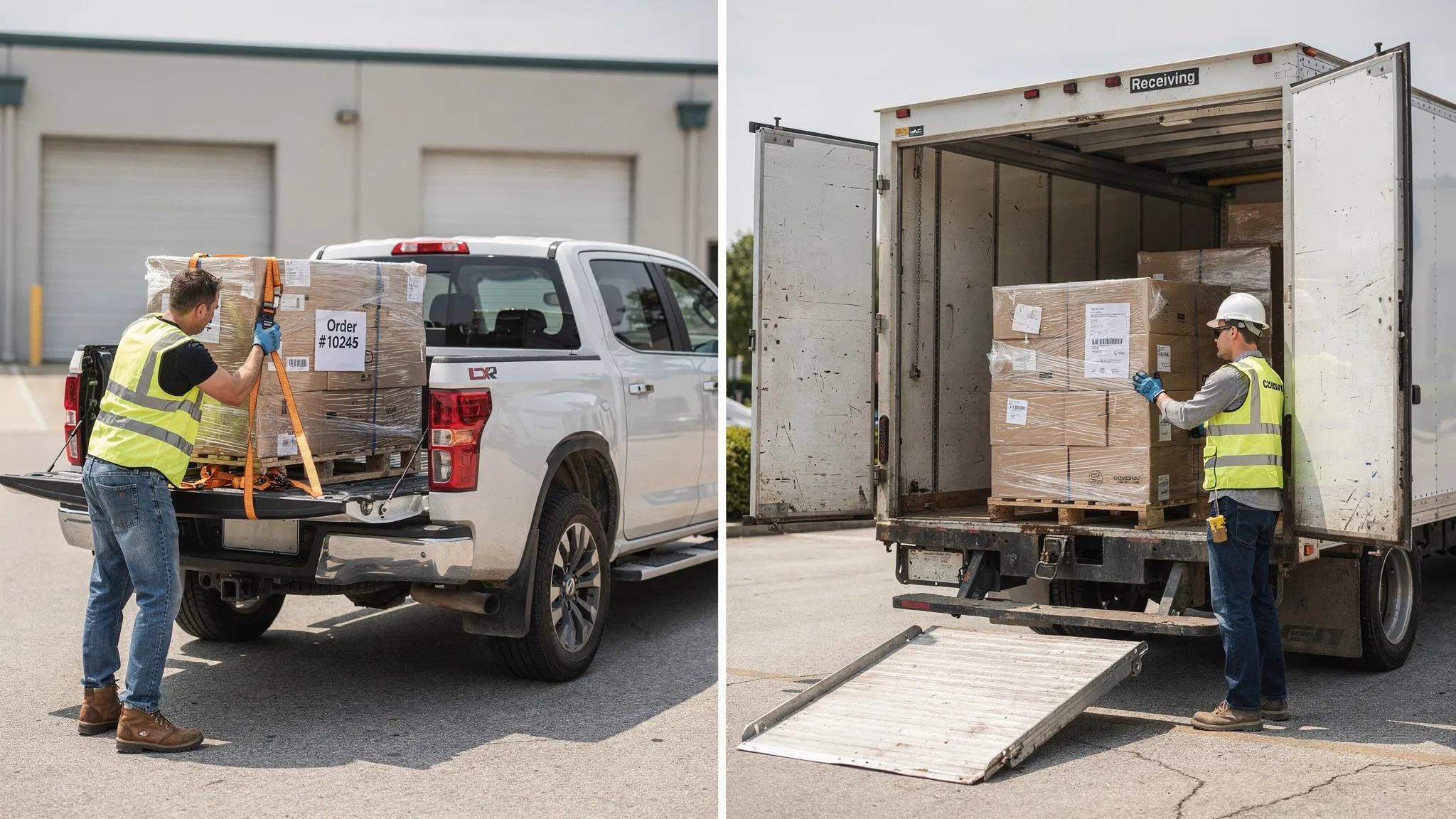
Local pickup is straightforward: you pay, you arrive during the pickup window, and you load pallets into your vehicle or trailer.
Advantages of pickup
You control the timeline. If you need inventory now (for weekend flea markets, local pop-ups, or quick online flips), pickup can be the fastest path from payment to product.
You can often inspect condition. Many warehouses won’t let you open-wrap and dig through, but you may still be able to visually check for obvious red flags (water damage, crushed boxes, leaning stacks, poor wrap).
You can reduce shipping surprises. With pickup, there’s no residential delivery fee, liftgate charge, missed appointment fee, or re-delivery fee.
Trade-offs to plan for
Your vehicle becomes your “freight company.” That means fuel, mileage, labor, and sometimes equipment rental.
Loading may be your responsibility. Some warehouses load with a forklift, others require you to bring help or the right vehicle.
Local inventory can be inconsistent. Many “near me” options are smaller lots, mixed sources, or highly picked-over categories.
Pickup is best if you are…
- Starting small and learning grading (customer returns, overstock, shelf-pulls).
- Running a flea market or local resale business with quick turn.
- Comfortable with physical labor and have a reliable truck/trailer.
Freight delivered liquidation pallets: when shipping wins
Freight delivery (LTL for smaller shipments, or full truckload for large orders) is how many serious resellers scale. It allows you to buy from top suppliers nationwide instead of being limited to whatever happens to be “near me” this week.
Advantages of freight delivery
You can source better inventory, not just closer inventory. This matters if you want:
- More consistent categories (electronics, tools, home goods, apparel)
- Higher unit counts
- Better documentation (like manifests)
It supports scaling. Once you know your sales channels and your average margins, the ability to receive pallets regularly is a major advantage.
You reduce time spent driving and loading. If your time is better spent listing on eBay, shipping orders, or running ads, freight can be the smarter “true cost” decision.
Trade-offs to plan for
Freight has rules. Delivery appointments, dock height, accessorial fees, and consignee responsibilities can impact cost.
Receiving matters. If you don’t have a dock or forklift, you may need liftgate service, or choose delivery to a business location that can receive freight.
Damage claims take documentation. You must inspect pallets on arrival and note issues on the delivery receipt, then take photos immediately.
Pickup vs freight delivered pallets: a quick comparison
| Factor | Pickup (Local) | Freight Delivered (LTL/Truckload) |
|---|---|---|
| Speed to get inventory | Fast if inventory is ready | Fast once dispatched, but depends on carrier schedules |
| Upfront logistics | Vehicle, straps, labor | Appointment, receiving plan, accessorial fees |
| Ability to scale | Limited by your vehicle and time | Easier to scale with recurring deliveries |
| Inventory selection | Limited to what’s local | Nationwide sourcing and larger lot options |
| Risk of “surprise fees” | Low | Medium (liftgate, limited access, re-delivery) |
| Best for | Beginners and local sellers | Growing resellers and high-volume operations |
The real cost of “liquidations near me”: a practical way to compare
Many resellers only compare the pallet price. Instead, compare landed cost.
Landed cost is what you actually pay per pallet (or per unit) after logistics.
For pickup: include these costs
- Fuel and tolls
- Vehicle wear and tear
- Your time (and helper labor, if any)
- Packing materials and straps
- Risk cost (one blown tire or a late pickup can erase savings)
For freight: include these costs
- Freight rate (LTL or truckload)
- Liftgate fee (if no dock/forklift)
- Limited access or residential delivery fees (if applicable)
- Storage or detention risk (if you are not ready to receive)
If freight adds $250 to a pallet order but lets you buy a better category with stronger sell-through, you can come out ahead.
Questions to ask before you choose pickup or delivery
These questions protect your cash flow and help you avoid misunderstandings:
Questions for pickup orders
- What are the pickup hours and appointment requirements?
- Will the warehouse load the pallets with a forklift?
- What vehicle type is required (box truck, trailer, dock height)?
- Are pallets stacked or can they be safely loaded one by one?
Questions for freight delivered orders
- Is the shipment LTL or full truckload?
- Are pallets standard size (typically 48×40) and properly wrapped?
- Is a delivery appointment required?
- Do I need liftgate service?
- Do you provide a manifest (when applicable) and tracking?
Common mistakes resellers make with freight delivered liquidation pallets
Freight is not “hard,” but it punishes sloppy planning. Here are avoidable errors:
Delivering to the wrong type of address
If you ship to a home address or a location without equipment, costs can jump. If you are new, consider delivering to a business location that can receive freight, or plan liftgate service and ground-level unloading.
Not inspecting on delivery
When the truck arrives, inspect for:
- Torn shrink wrap
- Crushed corners
- Wet or stained cartons
- Leaning stacks or broken pallets
Take photos immediately and note visible damage on the delivery receipt before signing.
Buying “cheap” pallets that are expensive to process
Some lots are cheap because they require heavy testing, cleaning, or parts sorting. If your model is quick flips, freight-delivered pallets with clearer condition notes or manifests can reduce labor per dollar earned.
How tech fits in (especially for eCommerce resellers)
Once you move beyond local sales, your bottleneck often becomes listing speed and system reliability. Many resellers use inventory spreadsheets, repricers, and multi-channel listing tools, which run better when your setup is stable.
If you’re running heavier tools, remote workflows, or want an always-on environment for your store operations, a managed VPS can help. For example, high-speed VPS hosting can be useful for hosting lightweight apps, automation, or keeping business tools running without tying up your personal computer.
Which option is better for your resale model?
Choose pickup if…
You are optimizing for immediate cash turnover and hands-on selection. Pickup is often a great fit for:
- Flea market vendors who need inventory weekly
- Facebook Marketplace sellers doing fast local flips
- New resellers learning what sells in their area
Choose freight delivery if…
You are optimizing for consistency and scale. Freight is often a great fit for:
- Amazon/eBay resellers who need steady supply
- Small businesses building repeatable inventory cycles
- Buyers who want access to larger wholesale lots and truckloads
Sourcing beyond “liquidations near me” without losing control
Searching local is a good start, but long-term success comes from dependable supply and clear expectations.
American Bulk Pallets supplies wholesale liquidation pallets and direct truckload liquidations with nationwide (and international) shipping options, plus manifests when available and support for resellers. If you’re currently limited by what’s near you, expanding to freight delivery can open better categories and more predictable volume.
You can also learn the fundamentals of building margins, reading manifests, and scaling your buying strategy in this related guide: Unlock Big Profits with Pallet Liquidation Wholesale.
Frequently Asked Questions
Are “liquidations near me” always cheaper than shipped pallets? Not always. Local pickup can reduce shipping fees, but your fuel, time, and vehicle costs still matter. Compare landed cost per pallet or per unit.
What’s the difference between LTL and truckload liquidation deliveries? LTL ships a smaller number of pallets on a shared freight truck. Truckload is a full trailer, typically used for higher volume and more consistent supply.
Do I need a forklift to receive freight delivered pallets? Not necessarily. You can request liftgate service (carrier lowers pallets to the ground), or deliver to a business location with a dock or equipment.
Can I inspect pallets before buying if I choose freight delivery? Usually you can’t inspect individual pallets beforehand. To reduce risk, buy from suppliers that provide manifests (when applicable), clear condition notes, and responsive support.
What should I do if pallets arrive damaged? Photograph the shipment immediately, note visible damage on the delivery receipt before signing, and contact the supplier/carrier quickly to start the claim process.
Ready to buy pallets the way that fits your business?
If you want to stop guessing and start sourcing consistently, explore current wholesale options at American Bulk Pallets. Whether you prefer local-style pickup planning or freight-delivered scaling, the goal is the same: reliable inventory you can resell profitably.