Home improvement returns are a sweet spot for many resellers because the demand is steady year-round. Whether you sell on eBay, Facebook Marketplace, at a flea market, or through a small hardware outlet, Home Depot returns pallets (often sold through liquidation supply chains) can offer a practical mix of recognizable brands, repeat buyers, and items that are straightforward to test.
The key is treating them like a numbers game, not a treasure hunt. Your profit depends on understanding what typically shows up on these pallets, what actually resells, and how to protect your ROI with a simple intake and pricing process.
What “Home Depot returns pallets” usually means (and what it does not)
When people search for Home Depot returns pallets, they’re usually looking for pallets built from customer returns, shelf pulls, overstock, and damaged-box items tied to home improvement retail. These loads are typically sold through reverse logistics and liquidation channels, then repalletized and offered to resellers.
Two important clarifications for buyers:
- The label is often descriptive, not a guarantee. Some lots are marketed as “Home Depot returns” based on the upstream supply chain, but not every pallet will be fully brand-pure.
- Condition can vary widely. Tool pallets can include new, open-box, missing accessories, “untested returns,” or salvage items, sometimes all on the same pallet.
That’s why manifests, grading, and landed-cost math matter more than the label.
What you’ll commonly find in tool and hardware return pallets
In general, home improvement pallets trend toward practical items with clear end users. That’s good for resale because you’re not trying to “create demand,” you’re tapping into existing demand.
Common categories include:
- Power tools: drills, impact drivers, saws, nailers, batteries, chargers (returns can be untested, incomplete, or lightly used)
- Hand tools: wrench sets, sockets, clamps, measuring tools
- Tool storage: organizers, cases, rolling toolboxes (often bulky but strong local-sale items)
- Hardware: fasteners, anchors, brackets, hinges, door hardware
- Electrical and lighting: switches, outlets, LED fixtures, shop lights
- Plumbing: faucets, valves, fittings, small repair parts
- Paint and adhesives: caulk, tapes, patch kits (watch hazmat and leaking risk)
- Seasonal: pressure washer accessories, garden tools, fans/heaters, holiday lighting
Where resellers get hurt is assuming every tool pallet is “high dollar.” Many tool pallets are profitable, but only if you plan for:
- Missing batteries and chargers
- Missing manuals, bits, blades, or accessories
- Retail packaging damage
- Returns that were swapped, used hard, or mis-boxed
Fast “sellability” check by category
Use this table as a quick filter when you review a manifest or photos. The goal is to estimate labor, testing difficulty, and return risk.
| Category | Why it sells | Common issues in returns | Best resale channels |
|---|---|---|---|
| Cordless tools (bare tool) | Strong demand, easy to ship | No battery/charger, unknown hours | eBay, FB Marketplace, flea market |
| Batteries/chargers | High demand, fast turnover | Capacity degradation, counterfeit risk in the market | Local + online (with clear testing notes) |
| Hand tools | Simple, low returns | Missing pieces in sets | Flea market, local, bundled lots |
| Tool storage | Great local margin | Shipping cost, dents/scratches | FB Marketplace, OfferUp |
| Electrical/lighting | Constant DIY demand | Open box, missing mounting parts | eBay, local |
| Plumbing fixtures | Higher ticket potential | Missing trim parts, water staining | eBay (detailed photos), local |
| Adhesives/chemicals | Repeat buyers | Leaks, hazmat restrictions | Local only (often) |
How manifests help you protect ROI (and what to look for)
A manifest is not perfect, but it helps you avoid the biggest ROI killers: overpaying and underestimating labor.
When you review a manifest for Home Depot returns pallets, focus on:
- Count of high-value SKUs vs small parts: Ten “$8 items” are not the same as one “$80 item” when you factor labor.
- Condition notes: “Untested,” “used,” “damaged,” and “missing parts” should trigger a lower target buy price.
- Concentration risk: A pallet with 40 of the same niche item can be slow to move unless you already have that customer base.
- Hazmat flags: aerosols, solvents, fuel-related items, certain batteries (these can complicate shipping and marketplace compliance).
If you’re newer to liquidation buying, it’s worth bookmarking a checklist and using it every time. This guide pairs well with the same decision-making mindset: Pallets Store Guide: What to Ask Before You Buy.
The ROI math: landed cost first, then recovery rate
Most reseller mistakes come from using “MSRP” as the main pricing anchor.
Instead, work backwards from landed cost and realistic recovery.
Step 1: Estimate landed cost (not just pallet price)
Your landed cost is what you actually pay to get sellable inventory into your space:
- Pallet or lot price
- Freight/shipping
- Liftgate fees (if needed)
- Supplies (labels, bins, shrink wrap)
- Disposal (trash, scrap, unrecoverable items)
If you’re debating pickup versus freight delivery, this breakdown will help you choose the better option for your situation: Liquidations Near Me: Pickup vs Freight Delivered Pallets.
Step 2: Use a recovery rate you can defend
Recovery rate is the percent of the manifest value (or your own conservative resale estimate) you realistically expect to collect.
For tools and hardware returns, many sellers model recovery in ranges based on condition mix:
- Better-grade / more new-open-box: higher recovery
- Mixed returns / untested: medium recovery
- Heavy salvage: lower recovery
Rather than pretend there’s one perfect number, use a range and decide if the deal still works.
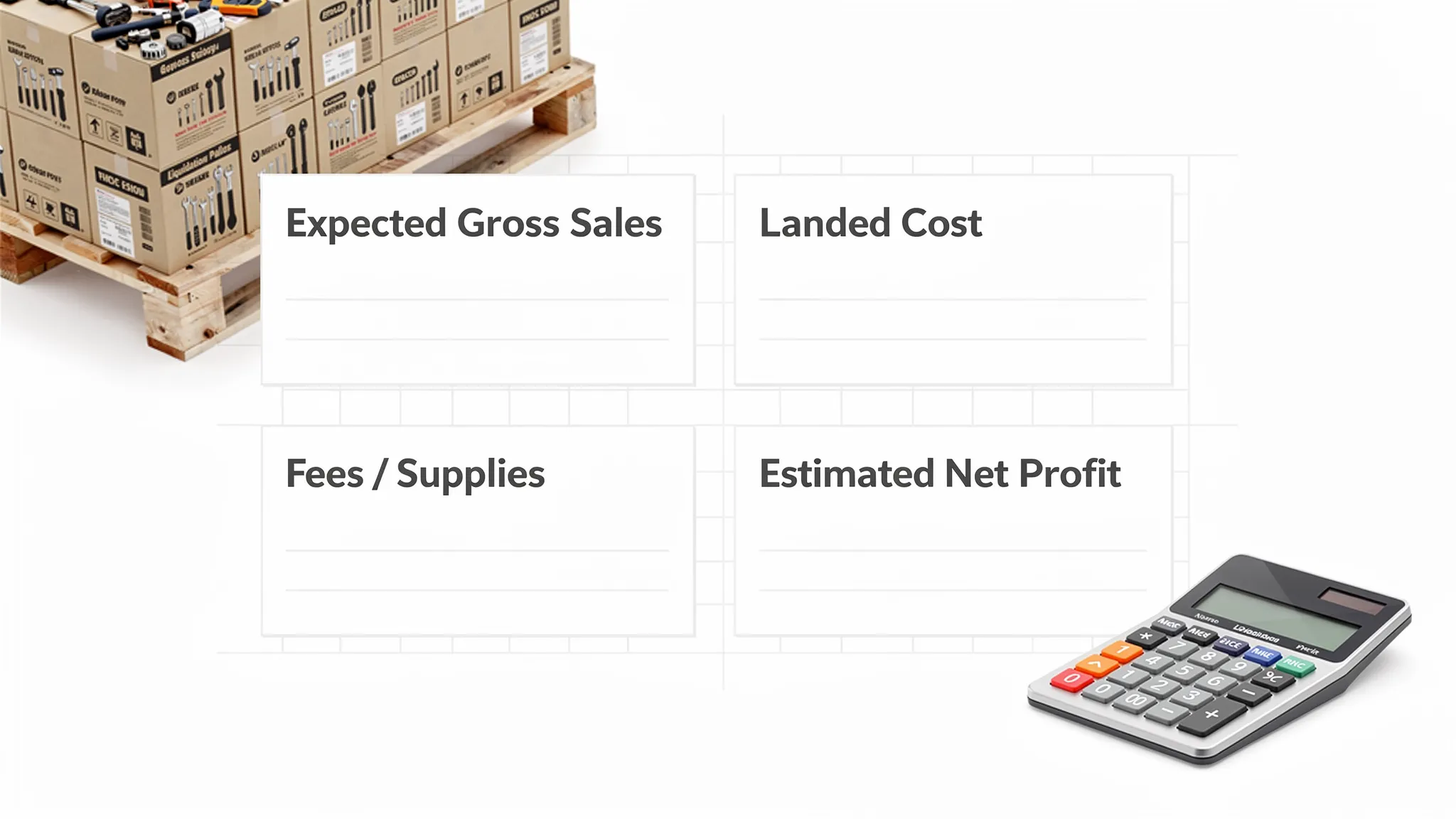
Here’s a simple worksheet-style example you can adapt:
| ROI input | Conservative case | Target case |
|---|---|---|
| Expected gross sales (after discounts) | $2,000 | $2,600 |
| Landed cost (pallet + freight + fees) | $1,200 | $1,200 |
| Platform fees/processing supplies | $200 | $250 |
| Estimated refunds/returns | $100 | $130 |
| Net profit (estimate) | $500 | $1,020 |
This table is illustrative, not a promise of results. Your actual outcome depends on item condition, testing skill, channel, and pricing.
Practical ROI tips for tools and hardware pallets
The fastest way to improve ROI is usually not “find better pallets.” It’s improving how you process, grade, and sell what you already bought.
Price by grade, not by hope
Create 3 grades you can apply consistently (and describe honestly in listings).
Example grading approach:
- New/Open Box: complete, clean, powers on, minimal wear
- Tested/Used: visible wear, tested functional, may be missing minor accessories
- Parts/Repair: does not function, missing critical pieces, or untestable
This reduces decision fatigue and keeps your listings consistent, which lowers returns.
Separate “online-shippable” from “local-only” on day one
Tool storage, bulky lighting fixtures, and certain liquids can destroy your margin online due to dimensional shipping or restrictions. Sort these into a local-only lane immediately so you don’t waste time trying to force them into the wrong channel.
Bundle the long-tail items
Hardware is often profitable in bundles:
- Mixed fastener lots (by type or size)
- “Job lot” electrical accessories
- Plumbing repair bundles
Bundling lowers labor per dollar earned and moves inventory faster.
Test what matters (and document it)
For cordless tools, a consistent, minimal test is usually enough to support your price:
- Power on (trigger response)
- Basic function (spin, oscillate, cut test where safe)
- Battery seat integrity (no wobble, no broken tabs)
- Visual check for burning smell, scorch marks, cracked housings
Then take clear photos of serial plates and any damage. Better documentation typically means fewer disputes.
Expect “missing accessories” and price accordingly
A common tool-pallet reality is missing chargers, side handles, depth guides, blades, and cases. Build an accessory replacement plan:
- Stock a small “charger/battery” bin if you buy these pallets often
- Price bare tools as bare tools (do not imply completeness)
- Use parts tools to complete higher-grade units when it’s worth the labor
Pallets vs truckloads: when scaling changes the strategy
Once you’re moving multiple pallets a week, the best ROI improvements often come from buying in larger volume and standardizing intake.
- Pallets can be ideal for testing a category and learning demand in your area.
- Truckloads can lower unit cost and keep inventory consistent, but require more space, cash flow planning, and a stricter receiving process.
If you’re evaluating a larger buy, use a safety-first process for vetting, freight planning, and paperwork: American Liquidations: How to Buy Truckloads Safely.
Sourcing Home Depot-style returns pallets without getting burned
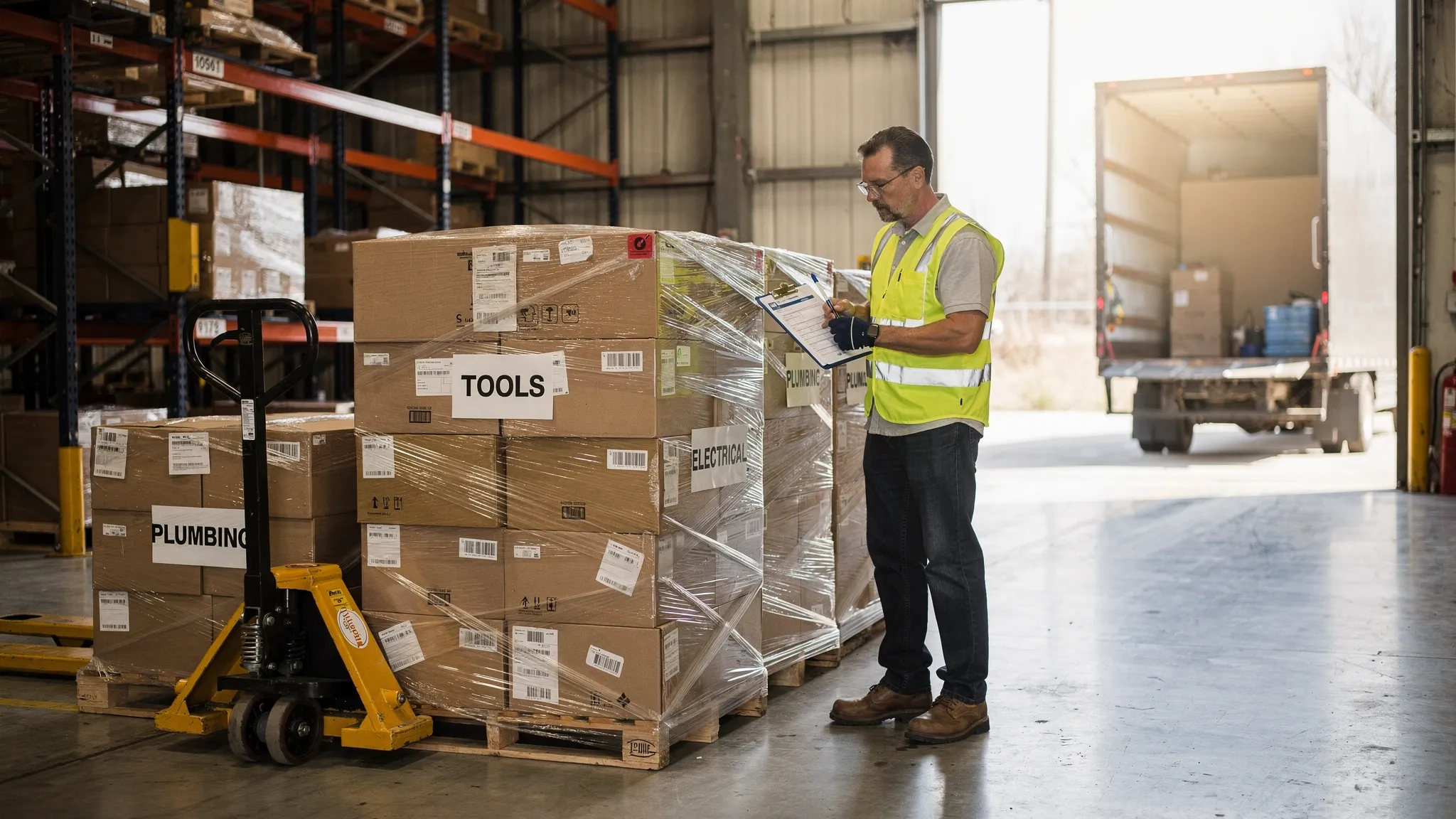
If you’re buying “Home Depot returns pallets” through a liquidation supplier, protect yourself with a few non-negotiables:
- Ask if manifests are provided and whether the pallet is sorted or unsorted
- Confirm the condition grading used for the load
- Confirm whether the lot may include mixed retailers
- Get clarity on freight terms (appointment delivery, liftgate, limited access)
- Ask what happens if there’s a major mismatch between manifest and delivered goods
This is the same discipline that makes any pallet reselling business more predictable. For more foundational strategy, see: Unlock Big Profits with Pallet Liquidation Wholesale.
A note for resellers thinking internationally
Most readers here are buying and selling in the U.S., but some resellers eventually explore overseas expansion (for example, setting up a business entity abroad, sourcing partners, or investing profits internationally). If you’re an Australian entrepreneur exploring UAE expansion, Dubai Invest is a relevant starting point for Dubai real estate and business setup guidance.
Frequently Asked Questions
Are Home Depot returns pallets profitable for resellers? Yes, they can be profitable when you buy at the right landed cost, assume realistic recovery, and have a process for testing, grading, and selling. Profit is not guaranteed because condition mix varies.
What’s usually inside Home Depot returns pallets with tools and hardware? Common contents include cordless tools, hand tools, hardware (fasteners and fittings), lighting/electrical items, plumbing parts, and tool storage. Expect some missing accessories and a mix of conditions.
Should I buy tools pallets if I can’t test everything? You can, but you should price as “untested” and focus on simple, consistent checks. If you cannot test at all, avoid paying “tested working” prices and consider selling locally with clear disclosures.
What’s the biggest mistake when buying return pallets for resale? Underestimating landed cost and labor. Freight, disposal, missing accessories, and time-to-list can wipe out margin even when the manifest looks strong.
Is it better to start with a pallet or a truckload? Most beginners should start with pallets to learn the category and demand. Truckloads can improve unit economics later, but they require more space, capital, and tighter receiving workflows.
Ready to source tool and hardware liquidation more confidently?
If you’re looking for wholesale liquidation pallets and truckload deals with manifests provided and shipping options that work for resellers, explore inventory at American Bulk Pallets. You can also reach out to the team for guidance on choosing the right load size and category for your resale channel.