Searching “amazon pallets near me” usually means you want a local pickup load you can inspect, pay for, and haul home the same day. That can be a smart way to reduce freight costs and move faster, but it is also where many first-time buyers get burned because “Amazon pallets” is a loose phrase used in ads, not a regulated product label.
This guide shows you where legitimate pickup loads actually come from, how to verify the seller before you drive, what paperwork to expect, and how to decide if the deal is worth your time.
What “Amazon pallets” means in local pickup listings
In the liquidation world, “Amazon pallets” typically refers to pallets of returned, open-box, overstock, or damaged-packaging merchandise that originated somewhere in the Amazon ecosystem (or was simply marketed that way). Two important realities:
- “Customer return” is a source label, not a condition grade. A return could be unopened, missing parts, used, or not working.
- Many local listings are not Amazon-direct at all. They may be mixed retailer returns, shelf-pulls, or closeouts that someone is branding as “Amazon” because it attracts buyers.
If you want a quick refresher on how Amazon-origin loads are typically built, manifests, and how margins really work, start with these internal guides:
Where legit “Amazon pallets near me” pickup loads actually come from
Most legitimate local pickup deals come from businesses that already handle returns, surplus, and wholesale distribution. Here are the common sources and what to expect.
| Local source type | What it usually is | Best for | What you should ask for |
|---|---|---|---|
| Liquidation warehouse / reseller warehouse | Mixed pallets from multiple lanes (returns, open-box, shelf-pulls) | Beginners testing small volumes | Manifest (if available), condition mix, photos of the exact pallets, pickup terms |
| 3PL or returns processor | Consolidated returns lots, often untested | High-labor operators who can triage fast | Source documentation, pallet count, how lots are built, any restrictions |
| Bin store / discount store backroom sales | Their “overflow” pallets from prior buys | Local flippers who know the category | Whether cherry-picking happened, average sell-through, what is excluded |
| Local auction house / commercial auction | Pallets listed as lots with scheduled pickup | Buyers comfortable with auction risk | Lot preview rules, buyer premium, load-out fees, payment rules |
| Freight terminal hold (rare as a “deal”) | Your own paid shipment held for pickup | Businesses buying from national suppliers | Appointment windows, ID requirements, accessorial fees |
The key takeaway: “Near me” is about logistics, not legitimacy. Legit loads can be local, and scams can be local too. Your job is to verify (1) the seller is a real operating business, (2) the inventory matches the description, and (3) you can document what you picked up.
A practical vetting flow you can do in 30 minutes (before you drive)
When a listing looks good, do this before you schedule a pickup time.
1) Verify the business is real
Look for consistency across:
- Company name, address, and phone number
- A website or business profile with the same info
- Reviews that mention pickup or warehouse buying, not just vague “great service” comments
If the seller will not share a business name or only communicates through DMs, treat that as a high-risk signal.
2) Confirm the pickup location is an actual warehouse you can access
Ask for:
- Exact pickup address
- Pickup hours and whether an appointment is required
- Loading method (forklift available or “hand load only”)
A common problem with “amazon pallets near me” ads is a real address that is not a liquidation facility (or is a facility that has no idea who the seller is).
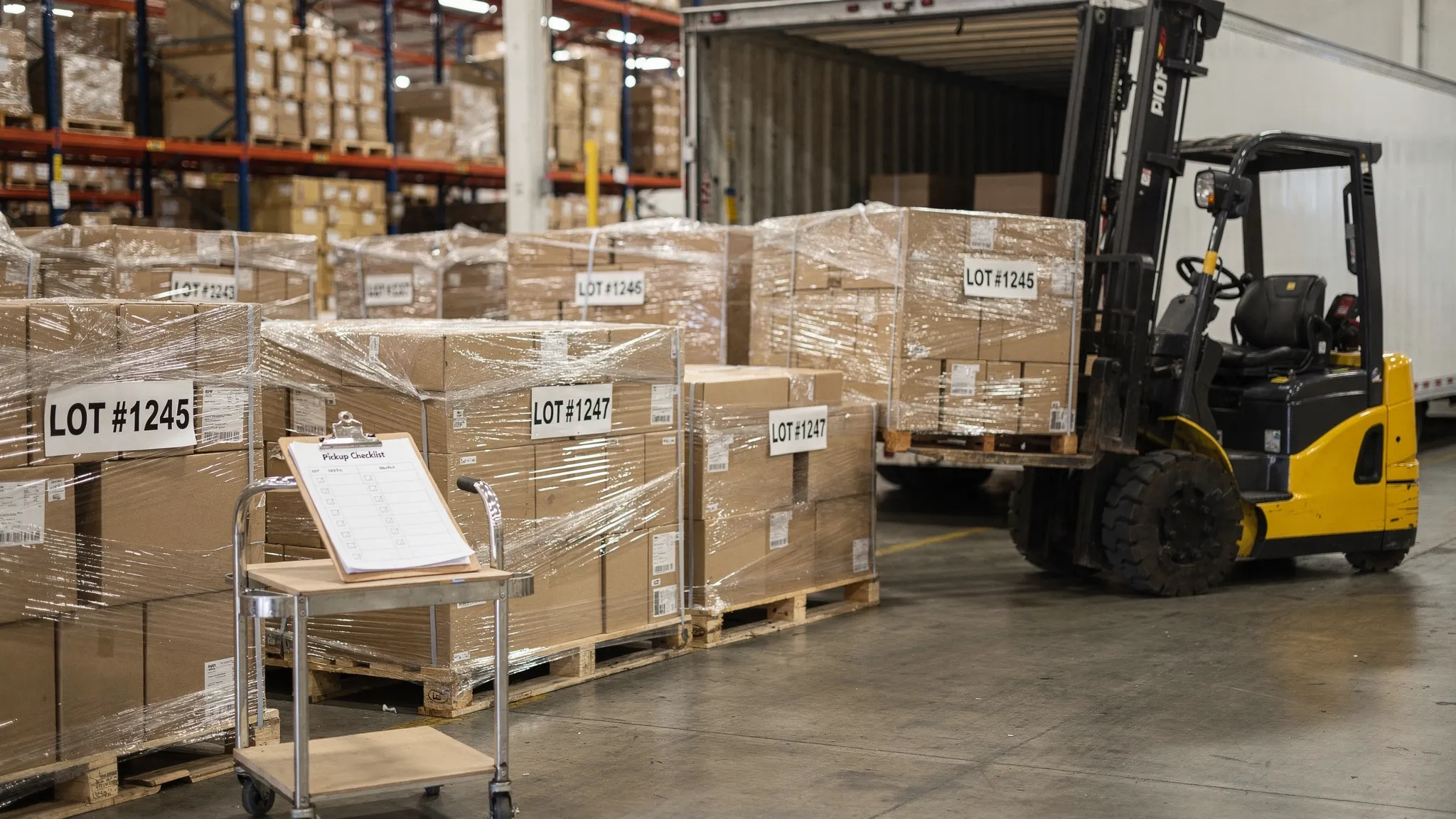
3) Require photos or video of the exact pallets you are buying
Generic stock photos are not enough. Ask for:
- A short video walkthrough showing the lot tags, pallet wrap, and multiple angles
- Close-ups of any labels, grade tags, or SKU stickers
4) Ask whether there is a manifest (and what “manifested” means here)
Some local sellers misuse the word manifest. Clarify:
- Is it an itemized list, or just a vague category summary?
- Does it include quantities, MSRP, or condition notes?
- Is it tied to the exact lot you are buying?
For deeper manifest evaluation and condition labels, this internal guide is helpful: Amazon pallets explained: conditions, manifests, and margins.
5) Get the payment terms in writing
A legit operator can state, clearly:
- Total price and what is included (pallet count, manifests, load-out)
- Accepted payment methods
- Whether deposits are required and whether they are refundable
Be especially cautious with “deposit required to hold” when the seller refuses to show real inventory.
The questions that separate real pickup loads from bad surprises
If you only ask five questions, ask these.
| Question | Why it matters | What a good answer sounds like |
|---|---|---|
| “What is the source of this lot?” | Prevents “Amazon” being used as marketing | “Customer returns from an eCommerce lane,” “overstock,” “shelf-pulls,” plus documentation context |
| “What is the condition mix?” | Tells you labor and recovery risk | A range (for example: returns/open-box/some salvage) with honest caveats |
| “Can I see the exact pallets before paying?” | Protects against bait-and-switch | “Yes, preview on-site,” or “video walkthrough of the lot tags” |
| “Who loads, and is there a load-out fee?” | Avoids day-of pickup delays and surprise costs | “Forklift on-site, included,” or a clearly stated fee |
| “What paperwork do I receive?” | Helps with accounting, disputes, and reselling | Receipt/invoice, lot ID, pallet count, any manifest files |
If you get defensive answers, rushed pressure, or “trust me bro” vibes, walk away.
Is local pickup actually cheaper? Use landed cost, not gut feel
Pickup can be a great move, but only if you price in your real costs. Even when freight is “free” (because you drive), you still pay in time and operating expense.
A simple way to think about it:
True landed cost = purchase price + all pickup costs + expected loss from unsellables
Here are common pickup costs resellers forget to include.
| Cost bucket | Examples | Why it matters |
|---|---|---|
| Vehicle and travel | Fuel, tolls, trailer rental, mileage, maintenance | Can wipe out the “saved freight” advantage |
| Labor and time | Drive time, wait time, loading time | Your time has a dollar value, especially if you have staff |
| Load-out and accessorials | Forklift fee, pallet fee, storage fee if late | Some warehouses charge per pallet loaded |
| Post-processing | Sorting, testing, cleaning, disposal | Returns-heavy lots are labor multipliers |
| Compliance risk | Restricted items, recalls, hazmat, missing chargers | Can slow sales and increase returns in your own store |
If you are comparing pickup pallets versus shipped pallets or truckloads, this internal breakdown helps: liquidations near me: pickup vs freight delivered pallets.
Pickup day playbook (how to leave with the right pallets and proof)
Local deals often go wrong on pickup day because the buyer shows up unprepared. Here is a simple, repeatable routine.
Before you arrive
- Confirm the appointment window and whether you need a dock height trailer or can be loaded at ground level.
- Bring straps, corner protectors, and a box cutter (for light wrap inspection if allowed).
- Make sure your vehicle capacity matches the load (pallet footprint, weight, and how many can fit safely).
At the warehouse
- Match the lot ID or pallet tags to what you agreed to buy.
- Take timestamped photos of each pallet (all four sides is ideal).
- Confirm pallet count before loading starts.
- Get your receipt or invoice that references the lot ID.
After loading
- Recount pallets and re-check straps before leaving.
- If the seller provides a manifest, save it with the invoice and your photos in the same folder.
That documentation matters for disputes, bookkeeping, and for building your own performance data (recovery rate by supplier and lane).
Red flags specific to “amazon pallets near me” ads
Some warning signs show up repeatedly in local Amazon-pallet listings:
- The ad promises “$10,000 retail value pallets” but cannot explain condition mix, returns, or how value is calculated.
- The seller will not share the business name, or the “warehouse” address changes after you pay.
- The photos show pristine, high-end items only, but there is no lot tag, no wide shot, and no proof they own the inventory.
- They claim you are buying “direct from Amazon” locally, but cannot show any legitimate chain-of-custody paperwork.
If you want a deeper fraud-focused checklist, use this internal resource: liquidation pallets near me: how to avoid scams.
Protect your business: paperwork, insurance, and risk
Even for small pickups, you are operating a real resale business with real risk.
- Keep invoices and lot IDs for tax documentation.
- If you scale to larger loads, talk to an insurance professional about commercial auto and cargo coverage.
- If you import or resell internationally, make sure you understand local requirements where you operate.
For example, buyers operating in the UAE often use comparison platforms to simplify coverage decisions. If that applies to your situation, you can compare and buy insurance online to review options in one place.
When “near me” is too risky, buy pallets shipped from a supplier built for resellers
Sometimes the best answer to “amazon pallets near me” is: don’t force local pickup if the market around you is shady, inconsistent, or overpriced.
A reputable wholesale liquidation supplier should be able to provide:
- Clear lot descriptions and condition expectations
- Product manifests when available
- Nationwide shipping (and support if you later scale into larger loads)
American Bulk Pallets focuses on wholesale liquidation pallets and direct truckload sourcing with nationwide and international shipping, plus dedicated support for resellers.
If you are deciding whether to stay at pallet volume or move up to larger buys, these internal guides can help you choose the safer path:
- Amazon bulk liquidation: pallets vs truckloads for resellers
- Direct truckload liquidations explained
To explore a more predictable sourcing route than random local ads, start at American Bulk Pallets and compare shipped options to what you are seeing in your local pickup market.